Embrace Uncertainty for Good Decision-Making
Click here for the TL;DR
In times of great uncertainty, fear can drown out rationality. The truth is, however, that nothing is certain. We just get to a level of confidence that allows us to make decisions and move through life. When that confidence is shaken, fear can partner with confirmation bias to convince us that the worst possible outcomes are more likely than they truly are, leading to bad decisions. When you accept uncertainty, stay calm, and rationally assess the situation, you can make decisions that match your core values and you’ll feel good about no matter how things turn out.
One of the core frameworks Antoinette and I have developed is the “Three Cs of Caregiving.” Although we mostly apply this framework for people navigating difficult caregiving situations, the Three Cs apply to any life disruption, such as being laid off, going through a breakup, or enduring a major election where the fate of democracy itself may ride on the outcome.
When life throws a major disruption in our path, it can feel like nothing we counted on can be taken for granted. Everything we thought was certain suddenly feels tenuous and questionable. Feelings of uncertainty flood our lives.
That’s why the first C in the Three Cs is Certainty. We strive for a feeling of certainty in uncertain times because decisions are hard when we don’t know what we can count on.
Uncertainty is the Norm, not the Exception
The reality is, however, that certainty is a red herring. Nothing is truly certain. We just build up a level of confidence that feels like certainty.
I have a high level of confidence, for example, that the chair I’m sitting in right now won’t collapse as I write this post. I’m leaning on a lot of assumptions and trust here, but it isn’t a certainty.
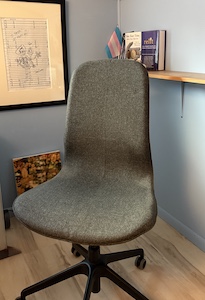
We make decisions all the time based on assumptions that come from our own experience and biases. If we didn’t, we’d be unable to go through our daily lives. We’d never cross a busy intersection or drive a car, for example. Or walk across a bridge, or ride in an elevator, or attend a class.
The experience and biases we carry give us a high level of confidence that the chair won’t collapse, that we won’t get run over, and that the bridge won’t give way under us. Even though we can’t be certain those things won’t happen. We assume (or convince ourselves) those things won’t happen because the evidence and our experience tell us with great confidence that they are incredibly unlikely to happen to us today.
But degrade that confidence, and suddenly we start to fear those terrible outcomes more and more. Degrading confidence can come in a dramatic, explosive package (like a diagnosis of cancer), or it can come as a constant dripping of things that erode confidence over time (like lies about immigrants).
When things that felt certain feel suddenly uncertain, it can throw us into a spiral of bad decisions based in fear. That’s why we crave certainty. “If only I knew what will happen,” we tell ourselves, “I will be able to make the right decisions and keep myself safe.”
But without certainty, it’s hard to feel you can keep yourself safe. So we start to manufacture certainty by looking for the evidence that will show us how things are going to go. And that’s where our biggest risk is.
Fear can drown out rationality. Fear partners with confirmation bias to highlight all the evidence that things will go badly, while ignoring evidence that things might go well. Because we are striving for certainty, we are looking for that clearest prediction that will let us make confident decisions that will keep ourselves safe.

The antidote is to embrace uncertainty. It’s not easy because uncertainty feels inherently unsafe. Us humans, we create structures and rules and laws to impose order and certainty into chaos and entropy. This gives us a feeling of predictability, which raises confidence in the outcomes of daily decisions. (I am perpetually astonished and delighted by the accuracy of Google Maps predictions, for example.)
But embracing uncertainty is how you keep the most rational, unbiased view of the situation you’re in. It’s how you can see the world most clearly. And when you see the world clearly, you make better decisions.
Better Decisions Through Embracing Uncertainty
It feels counterintuitive to say that the path to better decisions is to drop your need to know how things will go. But when you do that, three important things happen:
- Greater clarity and precision
Striving for uncertainty puts you in a mode of examining every tiny detail for something that you can base predictions on. But what ends up happening is you cherry-pick details that predict a result that maps cleanly to your existing worldview. When you embrace uncertainty, however, you see the world with greater curiosity and less built-in bias. That allows you to see a broader set of facts and live closer to truth and reality. This is where you can challenge your own beliefs and have access to a broader range of choices. - Decisions based in core values
We all like to think we base our decisions in rational assessment of the facts, but under stress we typically fall into reactive decision-making based primarily in trying to avoid a bad outcome. But when you embrace uncertainty, you can detach from the need to manipulate reality to match your worldview. This opens up space to bring your core values into the decision. I have found that when you base decisions in honoring your core values, you achieve greater confidence in yourself and less regret if things don’t go the way you hope. - Adaptability and flexibility
When the outcome is inherently unpredictable, embracing uncertainty leads to greater flexibility and nimbleness when things change. People who cling to a need for certainty tend to be less able to adjust course, often piling one bad decision on another trying to control the uncontrollable.
So, in this time of tremendous uncertainty, don’t waste too much time trying to see into the future to know what is going to happen next Tuesday, or even in the months following. Don’t waste energy fearing the most negative outcomes.
Instead, the best thing you can do for everyone is to center yourself, discern what you have control over and what you don’t, tap deep into your core values, and do what feels like the next right thing. If you later find that was wrong, forgive yourself and change course. Then wake up tomorrow and do it again.
By the way, my chair did not collapse while I was writing this.
Come to my Office Hours After the Election
When we teach the Three Cs, we apply it in a caregiving context. I’ve begun applying it in other contexts, and it’s proving to be a powerful, clarifying framework for any difficult situation.
On November 4th, the day after the election, I’ll be hosing an informal “zoom office hours” to focus on personal resilience and how to move forward, regardless of the outcome. I may share the full Three Cs framework on that call, if that’s where the conversation leads us. If you’re interested in coming, email me to get the link. I’m keeping it private so it can be a safe, confidential space for all of us.
What Uncertainty Are You Facing Right Now?
Let’s talk through it, whatever it is. Grab time on my calendar.
I help people make the most of every day. I help people live creatively, lead confidently, and care courageously. I am no wiser or smarter than the ancient gurus and sages, but I am a skilled and experienced practitioner of synthesizing all that wisdom into a version that is most useful to the person sitting across from me. That’s a skill based on innate talent, perpetual study, thousands of hours of practice, and a long, deep, rich life of diverse experiences.
Book us for Your Workshop
We would love to do our workshops for your team, staff, conference, or other group. We can build a custom workshop for your needs, on topics from nonprofit board development to powerful communications to overcoming burnout.
Over the past several months, our two most popular workshops have been
- Overcoming Compassion Fatigue
Compassion fatigue and burnout can affect everyone. We help individuals become more resilient and capable of avoiding and overcoming compassion fatigue. We help teams improve their culture and habits to reduce burnout. And we help leaders learn what causes burnout and compassion fatigue and how they can protect their teams from it while giving them the support they need. - Flourishing Through Caregiving
Caregiving is one of the hardest things any person can be called on to do, but it can also be filled with beauty, meaning, and purpose. Without getting sanctimonious or leaning on toxic positivity, we help individuals and families take on a caregiving responsibility without unnecessarily sacrificing their careers, their own health, their relationships, or their identity along the way. Centered around our Three Cs of Caregiving, this workshop covers aspects of project management, clear communication, team culture, personal resilience, and learning to be in control of your emotions instead of governed by them.
For more information, drop me a line with what you’re interested in, or just book an exploratory call on my calendar now.
Other Things to Do
Download a free chapter from one of my books. Or just buy the whole book now. You probably will after reading the free chapter anyway, so why wait?
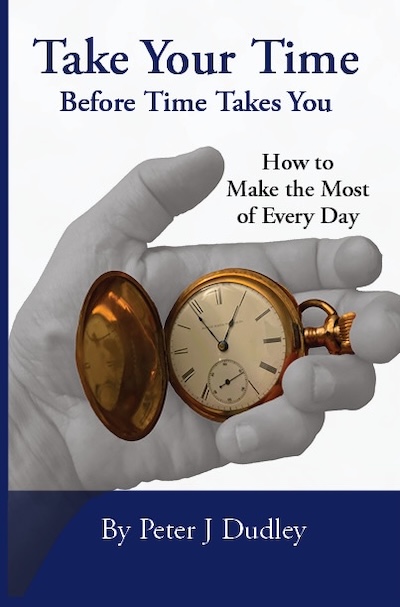
With Take Your Time Before Time Takes You, learn to make the most of every day through thought-provoking exercises and perspective-twisting stories. Get it now in paperback or ebook, or download the introduction now for free.
“It changed my life.” – TP, client
“A go-to guide for people who want to improve their lives but don’t know where to start.” – MJ, earlier reviewer

RELIT: How to Rekindle Yourself in the Darkness of Compassion Fatigue gives practical, actionable advice on avoiding and overcoming compassion fatigue and caregiver burnout. My chapter explains how I stay centered and focused so I can give every client my best, every time.
Download my chapter for free: Show up. Try hard. Be nice.
Or just go buy the whole book. It’s worth it.