The Expert, Derailed and Recovering
Click here for the TL;DR
I got derailed this morning, and as I was recovering, I realized three facts: 1. knowing how to do a thing is not the same as actually doing the thing; 2. feeling like a fraud is not the same as being a fraud; and 3. vulnerability is not a weakness but a human reality.
This morning I was completely derailed by a thing that happened. Doesn’t matter what it was. What matters is that I felt utterly incapable of recovering from this thing.
I knew recovery would happen. I knew “normal” would return. But for a good, long while, all I could do was stare blankly at the back yard, or the bookshelf, or my dresser.
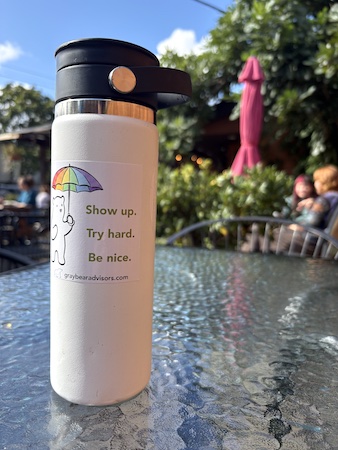
Eventually, I decided to walk to the local café and sit in the sun with my journal. Changing the environment, being among people, feeling the sun and fresh air, consuming coffee, writing down my thoughts and feelings… all things that qualify as “self care” in my book.
Losing my Grip Scratched my Confidence
I think I filled 12 pages in my journal cycling through facts, emotions, beliefs, fears, and whatever else oozed out. Recovery began around page seven and continued until page 10, when I realized I was writing more about upcoming events and less about the thing that happened.
At two of those upcoming events (SPIN Fair and OCF’s Topics in Cancer conference), I will be teaching people about resilience. I’ll be presenting myself as an expert on the topic.
I coach this stuff all the time. I’ve helped people beat burnout, become more resilient, and weather some hellish things. I mean, I even published a book on the topic.
But if I can get so derailed as I did this morning, should I really be up on stage as the expert?
In contemplating that question, I was reminded of three important facts:
Fact #1: Having a Skill is Not the Same as Putting That Skill to Use
Life isn’t lived in a controlled, safe container where all complications are removed. Life is messy. Life is not a series of high school physics problems, where you can calculate the trajectory of a projectile and get the “right” answer (not counting friction, crosswind, the imperfect shape of the projectile, changes in temperature and pressure, etc.).
No. Life is messy and complicated. Humans are fallible. No matter how many times you run a play on the practice field, doing it in a game will be different and unique. Every time. And it doesn’t always work.
So, despite having mastery-level skills in self-regulation and resilience, I am still susceptible to being utterly derailed. There is no perfect. Perfection is unattainable. This is why my son hates the phrase practice makes perfect. It doesn’t. Practice makes better. Perfect is unattainable.
To pretend otherwise is to set yourself up for even bigger crashes.
I was able to give myself some grace this morning. And, looking back, I actually did all the right things. I deployed my skills just as I would have coached someone to do. And here I am, later in the same day, writing about it.
Fact #2: Feeling Like an Fraud is not the Same as Being a Fraud
The wellness-industrial complex is full of charlatans, impostors, and well-meaning incompetents. I am none of those. (I have receipts.)
I know the information I share, the techniques I teach, and the coaching I give is world class and effective. If I ever feel like an impostor, I can look at my receipts (hundreds of people coached, 30+ years leading highly engaged teams, 10 books published, many awards and accolades and successes) and separate the feeling from the fact.
This is the idea behind the success jar we sometimes talk about. Keep a jar full of your successes so that if you ever have a crisis of confidence, you can pull a few out and remind yourself that you are, in fact, not a fraud.
Confidence, like trust, is hard to build but easy to break. It requires a solid foundation. If you’ve got that foundation, separate the feeling from the fact. Believe the fact. Do not trust the feeling.
Fact #3: Vulnerability is Not a Weakness; It’s a Reality of Being Human
As I thought about these things, and I thought about standing up on stage teaching people how to be resilient, I realized that the feeling I was having this morning—the experience of being derailed—is something no Artificial Intelligence can or will ever experience.
People going through shit need real guidance on getting through that shit in one piece. I think it helps to know that the guidance is coming from a real human who has also gone through some shit of their own. And I have. (I have receipts.)
Now, I love the elegant intellectual frameworks and models I’ve created that I teach and coach. They are things of beauty. They cut through ambiguity and complexity to explain human behavior and the human condition in a way that uses clear language to make hard-to-talk-about concepts easy to comprehend. I teach and present these elegant models, techniques, tools, and approaches to help people cope with and navigate some really shitty phases of life.
But if all I had was an academic picture of hardship and crisis, or if I were simply parroting what the gathered intellect of the internet said were the right words, it wouldn’t be fully believable. It might still be helpful, but it wouldn’t be real. It would be harder to trust.
My personal lived experience is what makes me confident that all these frameworks and models and techniques actually help. It’s not sanctimonious for me to tell people there’s hope. It’s not tone-deaf for me to tell them with confidence they can do it. I know it’s true because I’ve been there.

My point here is not that I am special and unique in this way. I am special and unique, of course, but many people have been through shitty stuff and can talk about it in ways that are helpful to others. AI might be able to produce helpful words, but no AI has or will ever go through shitty stuff like losing a child, caring for a parent with dementia, or having a spouse diagnosed with cancer. And the more we learn about the brain and nervous system, the more I think that truly matters on an existential and spiritual level.
I am not yet sure if I’ll talk on stage about the vulnerability I felt by being derailed. If I do, I think it will be a powerful point of human connection with the people I’m addressing.
There’s Not Always a Satisfying Ending
I really want to wrap up this post with a clean, satisfying ending. As a writer, I want it to feel like a beautifully closed loop, with a conclusion that makes you lean back in your chair and say something like, “Wow, what a good writer. What a smart guy.”
But today I got nuthin’. I am still in the middle of this experience, and still processing.
I decided to write this precisely for that reason. It’s fresh. It’s today. It’s real. It’s helping me pull my thoughts into line. It’s putting words and structure to ambiguity, uncertainty, and disorganized thought.
And who knows? It might end up being the seed of a new elegant framework I teach some day. Not even the very wise see all ends.
Let’s Be Human Together Sometime
I make my living helping people live creatively, lead confidently, and care courageously. But I also really like getting to know people and just talking through all this shit with them. Let’s have a virtual coffee sometime. Grab time on my calendar. Or if you’re ever in the Eugene area, let me know and let’s grab coffee in person.
Other Things to Do
Download a free chapter from one of my books. Or, learn about workshops and trainings that Antoinette and I provide for your staff, board, or club.
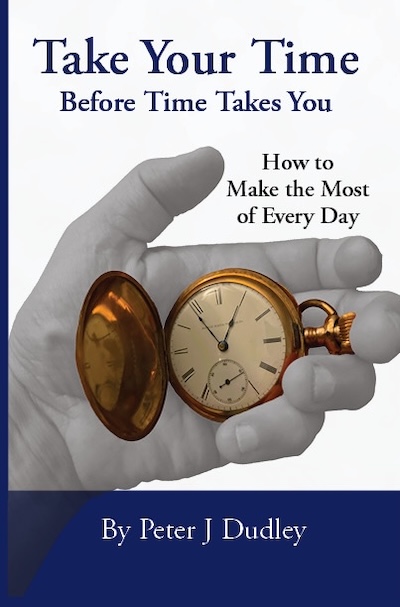
With Take Your Time Before Time Takes You, learn to make the most of every day through thought-provoking exercises and perspective-twisting stories. Get it now in paperback or ebook, or download the introduction now for free.
“It changed my life.” – TP, client
“A go-to guide for people who want to improve their lives but don’t know where to start.” – MJ, earlier reviewer

RELIT: How to Rekindle Yourself in the Darkness of Compassion Fatigue gives practical, actionable advice on avoiding and overcoming compassion fatigue and caregiver burnout. My chapter explains how I stay centered and focused so I can give every client my best, every time.
Download my chapter for free: Show up. Try hard. Be nice.
Or just go buy the whole book. It’s worth it.