Caregiver Burnout is Beatable
Click here for the TL;DR
During National Family Caregivers Month, you’ll see a lot of stories about people sacrificing their careers, their health, and their social relationships in service of caregiving. These will be stories of love and dedication, and they’ll feel like success stories. But the stories we don’t see are the successes that don’t involve self-sacrifice. This article highlights three myths about caregiving: 1) that it’s overwhelming, hard and sad; 2) that sympathy and visibility help; and 3) that self-sacrifice is to be honored and revered. It also lays out four key areas that help successful caregivers flourish: the right mindset, strong leadership skills, good project management, and clear prioritization.
November is National Family Caregivers Month, which means you’re about to hear how hard caregiving is for the next 30 days. You’ll hear about how it’s causing stress, depression, and financial hardship for millions of people.
You’ll hear huge numbers like 63 million Americans are family caregivers, which make it sound like the aging of the population is going to cause a crisis of unimaginable proportions that might just take down our economy if we don’t do something about it right now.
You’ll also see inspiring stories of heroic self-sacrifice, like the person who left the workforce entirely for their caregiving duties (this happens to one in 10 caregivers). You may even see a smidge of helpful advice in the form of fridge magnet wisdom—a list of ways to make time for self-care, for example.
I understand why these are the messages we’ll all see this month. The big, scary statistics help raise money and build support for legislative changes. And don’t we love stories of the heroic figure suffering through unendurable challenges for the sake of a loved one!
But I think, on balance, all this messaging creates a false understanding of caregiving and its role in most people’s lives. It perpetuates half-true stereotypes and reinforces destructive cultural norms that make it harder to be a caregiver than it needs to be.
The three stereotypes I want to bust are:
1. Caregiving is overwhelming, hard, and sad
Over the past few years, I’ve noticed a trend when I talk to people about their caregiving experiences. People who had good experiences often chalk it up mostly to luck. They say things like, “We were lucky that we had a good doctor,” or “we were lucky that we all pitched in equally.”
These are not the stories that get told. They are the stories that lack drama, that lack a compelling narrative. Culturally, we assume that all caregiving must be hard at an existential level, and if it didn’t feel devastatingly difficult, then maybe we did it wrong. Or maybe we just got lucky and we shouldn’t chirp about our good fortune to people who really do have it hard.
What surprises me about these hidden stories is how many there are. No one ever says their caregiving was easy, but a lot of people say they didn’t suffer major stress, depression, or hardship. They didn’t sacrifice their careers or their family relationships. What can we learn from those people? How do we bottle it and make it available to others?
Antoinette and I didn’t create the Three Cs of Caregiving by studying failure. We created it by studying success. And there’s a ton more successful examples out there than most of the messaging this month would suggest.
2. Sympathy and visibility help
One of the benefits of awareness months is that they help people feel less alone and isolated. But that ends up being little consolation when the visibility and sympathy don’t actually change the caregiver’s life in any meaningful way. You still have to do all the same things you did the day before, but now you are aware that 62,999,999 other people are doing the same thing… presumably, with the same overwhelm, sadness, and hardship the awareness month stories all talk about.
The false promise of an awareness month is that by increasing awareness, it’s somehow solving the problems of caregivers. But it’s not. Often, the opposite.
Imagine you have a torn ACL. Now imagine everyone you encounter pointing out how much it must hurt and how hart it must be to get around on crutches after surgery. You might feel momentarily less alone, but none of that awareness will change the fact that your ACL is torn. In fact, all that awareness might keep your mind focused on the problems it causes… even amplifying those problems in your mind beyond how bad they really are.
But awareness months are also full of practical advice, you might be thinking. And you would be right, to a point.
Caregivers will get advice this month. The internet will be filled with the same ten tips for self-care over and over and over again. Things you likely already know. Articles presenting ideas such as “take a short walk to clear your mind” like they’re revolutionary solutions you never thought of or heard before.
What truly helps caregivers is the deep, directed, focused work in four areas that we coach in:
- Mindset
Having the right mindset isn’t about taking a few deep breaths or meditating every day. It requires really understanding the role caregiving plays in your life, the value of your own quality of life versus the quality of life of the person your caring for, having perspective on your own values and your own mortality… most people skip right over this even though it’s the foundation on which all else is built and is the source of most interpersonal conflict. The most successful caregivers instinctively have the mindset that makes them successful. The rest of us have to work at it and recalibrate constantly. - Team and Family Coordination
Everyone thinks that because their family all love each other and get along, they’ll get through caregiving without major conflict. Or, because their family doesn’t get along, they can just exile the ones they don’t want involved. The most successful caregivers, however, are highly skilled not just in emotional intelligence, but in defusing conflict, engaging people in the things they’re good at, and avoiding assigning roles that don’t fit. The leader has to be the one who creates a culture of transparency, safety, and collaboration. It does not happen naturally most of the time, and often the one who is given the primary caregiving role has little or no leadership training or experience. Even the ones who do often have trouble translating that to family situations. It’s an art that can be learned. - Practical Task Management
There’s just a lot to get done. Time management is part of success, but so is being able to bring in the right experts at the right time. Financial advisors, legal advisors, medical system navigation, nutritionists, physical therapists, hospice—it is a lot to keep on top of, and even though no single task is insurmountable, they all take far more time than you want and end up being overwhelming unless you use the right tools and practices to stay on top of it. People feel like they’re stuck in a web of bungee cords when they have a lot of decisions to make, and every decision has a complexity of ripple effects. (Turn on the long-term care policy? Move mom into a care home? Take time off work? Change doctors?) Successful caregivers use the tools that work for them for organizing it all, keeping clear records, and making decisions. - Prioritization
Caregivers usually feel like they have more on their plate than can humanly be accomplished. That’s why a lot of people quit their jobs, ignore important friendships, and neglect their own health. In the thick of uncertainty, everything seems like a high priority. We get confused between what’s urgent and what’s important, and if we’re feeling out of control we my rush into action and busyness. When you’ve worked on your mindset, however, you have more ability to slow down and prioritize. Things go far more smoothly when you are doing things in the right order. Doing A before B will make B easier; doing B before A often means you have to do B all over again. The most successful caregivers don’t just tackle their to-do list; they get brutally honest about prioritization… to the point of deciding that many things that feel profoundly important may not actually need to be done at all.
3. Self-sacrifice is to be honored and revered
Celebrating stories of self-sacrifice is one of the worst things we do to caregivers in this society. Self-sacrifice is held up as a beautiful thing—a success story of love and dedication. But it’s really just a symptom of a dysfunctional system and broken mindset.
The most successful caregivers don’t sacrifice their own careers, health, relationships when they take on caregiving. They may choose caregiving over those things, and that can be beautiful when it’s done intentionally for the right reasons. A lot of successful caregivers make that choice and later talk about how much meaning and beauty they experienced because of it.
But mostly the social narrative is that “caregiving” means “your life as you know is is over.” And then we reward the martyrs with praise and kudos, lauding their dedication and reinforcing the narrative that if you haven’t sacrificed yourself in the caregiving process, you must not have done it well.
This created a social pressure to do more than is necessary, to look for problems where there may not be any, and to withdraw further. Because even as we honor and praise self-sacrifice, it’s kind of a drag to spend time with someone whose only topic of conversation is how hard their life is.
This martyr focus is why successful caregivers don’t talk much about their caregiving experience. They worry maybe they did it wrong, or that saying it was a good experience will offend people who are truly sacrificing themselves in the process.
Success is Achievable
When I run caregiver workshops, one thing I always point out is that I’m not being sanctimonious or lost in toxic positivity. There are situations that are simply untenable, or which are devastating. There are situations where people’s choices are limited to Shitty Option A or Shitty Option B. Caregivers are dealing with a situation where their loved one is suffering, and you can’t just mindset that away.
Caregiving is hard. It’s a lot of work. It’s exhausting. But it’s also beautiful, educational, and real. We tend to think of it as a horrible thing that happens to a few people, but in reality it is an integral part of what it means to be human and alive.
“There are only four kinds of people in the world: those who have been caregivers, those who are currently caregivers, those who will be caregivers and those who will need caregivers.”
– Rosalynn Carter
In most cases, however, as in any aspect of life, you get to decide how you want to experience it. There are values tradeoffs. There are consequences to the choices you make. Putting yourself in a mindset that lets you make those choices intentionally, intelligently, and with discernment is the path to greatest success and fewest regrets.
How Can We Help You or Someone You Know?
Let’s talk through it, whatever it is. Grab time on my calendar.
I help people make the most of every day. I help people live creatively, lead confidently, and care courageously. I am no wiser or smarter than the ancient gurus and sages, but I am a skilled and experienced practitioner of synthesizing all that wisdom into a version that is most useful to the person sitting across from me. That’s a skill based on innate talent, perpetual study, thousands of hours of practice, and a long, deep, rich life of diverse experiences.
Book us for Your Workshop
We would love to do our workshops for your team, staff, conference, or other group. We can build a custom workshop for your needs, on topics from nonprofit board development to powerful communications to overcoming burnout.
Over the past several months, our two most popular workshops have been
- Overcoming Compassion Fatigue
Compassion fatigue and burnout can affect everyone. We help individuals become more resilient and capable of avoiding and overcoming compassion fatigue. We help teams improve their culture and habits to reduce burnout. And we help leaders learn what causes burnout and compassion fatigue and how they can protect their teams from it while giving them the support they need. - Flourishing Through Caregiving
Caregiving is one of the hardest things any person can be called on to do, but it can also be filled with beauty, meaning, and purpose. Without getting sanctimonious or leaning on toxic positivity, we help individuals and families take on a caregiving responsibility without unnecessarily sacrificing their careers, their own health, their relationships, or their identity along the way. Centered around our Three Cs of Caregiving, this workshop covers aspects of project management, clear communication, team culture, personal resilience, and learning to be in control of your emotions instead of governed by them.
For more information, drop me a line with what you’re interested in, or just book an exploratory call on my calendar now.
Other Things to Do
Download a free chapter from one of my books. Or just buy the whole book now. You probably will after reading the free chapter anyway, so why wait?
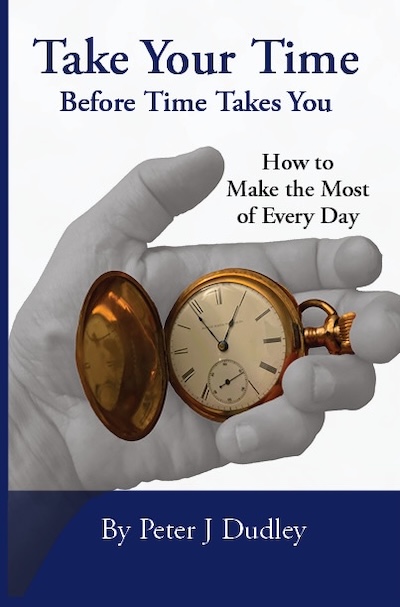
With Take Your Time Before Time Takes You, learn to make the most of every day through thought-provoking exercises and perspective-twisting stories. Get it now in paperback or ebook, or download the introduction now for free.
“It changed my life.” – TP, client
“A go-to guide for people who want to improve their lives but don’t know where to start.” – MJ, earlier reviewer

RELIT: How to Rekindle Yourself in the Darkness of Compassion Fatigue gives practical, actionable advice on avoiding and overcoming compassion fatigue and caregiver burnout. My chapter explains how I stay centered and focused so I can give every client my best, every time.
Download my chapter for free: Show up. Try hard. Be nice.
Or just go buy the whole book. It’s worth it.