How to Find Hidden Dysfunction
Click here for the TL;DR
People are very good at accepting systemic hidden dysfunction and learning to work around it. We like to think we work to fix the things that are broken, but mostly we learn to navigate the brokenness. Eventually, when everyone is navigating the brokenness, the dysfunction starts to feel like how things are supposed to work—that’s just how it is here. At that point, anything that tries to fix the inherent dysfunction feels like a threat to the people in the system. They will even fight to keep the hidden dysfunctions they’ve accepted and learned to work around. But there are ways to listen carefully and find those hidden dysfunctions so they can actually be addressed. Here’s what to look for.
Every group—family, workgroup, volunteer team—has some amount of dysfunction. This is because human beings are involved. It just happens.
We like to think we are always working to fix the dysfunction, but much of the time we normalize it instead. We get used to it. We work around it or learn to accept it. Then, at some point, we simply stop perceiving of its existence. What we started seeing as dysfunction becomes “just how things are around here.”

As a strategic thinker, I enjoy finding these hidden dysfunctions. One of the ways I uncover them is by listening closely to how people talk.
A good example happened recently when I heard a speaker talk about a new housing project in town. Housing is a huge topic in Eugene, which had the highest per capita homelessness rate in 2019. They’ve been working hard to tackle this problem, and making what looks like good progress.
The speaker was talking about new projects that are being fast-tracked for approval. Part of the prior dysfunction here was an unnecessarily burdensome permitting process, which stalled out a lot of good work and delayed real solutions.
The speaker was happy to say that this new project would be a mix of affordable housing and market rate housing.
*record scratch*
A mix of both affordable and market rate?
What knocked me sideways when I heard this was not the strategy of mixing affordable and market rate housing. I am in favor of that approach. What gave me pause was the language used. Why are “affordable” and “market rate” not synonyms? How are we as a society okay with those being two different categories? And when did that happen?
This isn’t a dig at the speaker. It’s not a criticism of our elected leaders or civil servants, who are extremely dedicated to finding workable, collaborative solutions. They have my support.
My beef is with all of us.
Hidden Dysfunction in Plain Sight
The language we use highlights the dysfunction we have all come to accept as “just how things are around here.” We have all agreed to use the terms market rate to represent current prices and affordable to represent what the majority of people could afford. And we have agreed that those can be different things.
Market rate is not affordable. Or, using a different emphasis: Market rate is not affordable.
We should all feel at least a little uncomfortable with that statement.
I’m not going to use this space for a rant on how our investor-centered system punishes affordability (always get the highest price possible!). That profit motive is partly what has made this country an innovation leader in the past.
My point is that if you listen carefully and critically, you can often identify a system’s hidden dysfunctions in the discordant language we have gotten used to.
Let’s take another example: The term public benefit corporation was first used in Maryland in 2010 to create a new type of company: a for-profit corporate entity whose goals include making a positive impact on society.
To quote Wikipedia (August 31, 2026): “A benefit corporation’s directors … are required to consider the impact of their decisions not only on shareholders but also on employees, customers, the community, and the local and global environment.” The idea, of course, is that We The People want to reward those who are trying to do business in a pro-social way.
But there’s a normalized dysfunction underlying this: we have all agreed that a for-profit corporation’s directors need only consider the impact of their decisions on shareholders. It’s up to those directors, for instance, to decide how poisoning the water supply will impact their shareholders, but they don’t have to consider the impact on employees, the community, or the environment. It’s not their job.
This new public benefit designation was created to allow some founders to differentiate themselves as more ethical and pro-social than the baseline. This feels like a thing that should be celebrated, but it hides the underlying dysfunction. Many of We The People might be surprised to find that corporate directors aren’t legally required to consider impacts on employees, the community, or the environment when they make corporate decisions.
Market rate is not affordable. For-profit is not public benefit. These are things we have accepted and normalized. We don’t even think of them as dysfunction anymore. It’s just how things are around here. In fact, we have so normalized this dysfunction that a large part of We The People think any kind of oversight or regulation is a threat to business and will destroy the economy. The dysfunction is fully integrated.
Seeing the Dysfunction Hiding in the System
When you look at any group you’re part of—a volunteer team, a company, a nonprofit board, a family—what words and phrases do you hear all the time that might expose some underlying dysfunction which has become normalized?
Here are some examples of good language masking bad systems:
- Hiring for potential or cultural fit
An organization that “hires for potential” may be unconsciously covering up a tacit ageism by downplaying experience and wisdom. A company that focuses on “cultural fit” may be unintentionally homogenizing its culture. - Get back up and try again!
For a while, LinkedIn was full of posts like this: “After 400 rejections, I finally landed my dream job!” and every comment cheered the poster’s determination. The perseverance merit badge may show a person’s grit, but it also illuminates a profoundly broken system. Literally no one is positively served by a system that results in people having to apply for hundreds of jobs to find work. - No one says “that’s not my job” here
A team ethic is great, unless it’s hiding a burnout culture. A culture of “we do whatever it takes until the job is done” may discriminate against people who have obligations outside of work, like childcare, elder care, or volunteer service. Those people will eventually burn out and leave, creating an even worse imbalance toward burnout. - We value loyalty here
I’ve written about this sloppy language before. Loyalty is never a two-way street. Fairness and equity are two-way streets, but loyalty flows in just one direction by its very definition. A fair system has employees that appear loyal because they stick around. That’s very different from a loyalty-based system, which will exploit the employees as far as possible, even to the point of breakdown. - Put the smartest person in charge
Some organizations (mostly in tech) promote the most technically proficient performer, on the theory that the one with the most knowledge or skill should be the one in charge. But by promoting the one with all the answers, you may actually be creating a more complacent culture because if the boss is going to fix what I create anyway, then why should I bother trying hard? The ethic of promoting technical competence seems positive, but it creates a cleverly hidden dysfunction that may drive down overall creativity of the group. - You’re so strong! (or dedicated)
Often this statement is followed by “I could never do what you are doing.” We all love a hero, so we celebrate self-sacrifice as if it is heroic. We think we’re being supportive, but in reality we’re normalizing self-sacrifice to unhealthy depths.
These are just a few examples that came to me in the hour I’ve been writing this piece. They don’t even touch on many of the things we hear in families that are steeped in limiting beliefs or entrenched drama. Things like:
- “Joe loves being dad’s caregiver” (always stepping up is not the same as wanting to do it)
- “She’s the glue that holds this family together” (maybe talk about why glue is needed?)
- “She doesn’t have kids, so she has time to be the one to do it” (so many assumptions in this one)
- “Dad values his independence” (define independence with more precision)
The biggest problem with hidden dysfunctions like these is that when you are inside the system, it does not feel like dysfunction. It’s just how things are around here. The more everyone accepts the language that entrenches the limiting beliefs and workarounds, the harder it is to perceive the underlying dysfunction.
You can’t fix what you can’t perceive, and ultimately that dysfunction will probably cause something to break. The unaffodability of housing may cause homeless rates to rise, for example.
And when enough people have found ways to safely exist within the dysfunctional system, any challenge to the underlying dysfunction will feel like insanity. Imagine a real estate agent who demands all their clients list their houses at 60% of market rate so they will be affordable. That would be insane, right? No one would hire that agent.
So if you’re a leader overseeing any kind of system, do not expect any individual within your system to go against whatever entrenched dysfunction exists. They won’t. That would be insanity, from their perspective.
Instead, it’s your job to find the dysfunction and redesign the system to eliminate it. One way to find the dysfunction is to get very skilled at listening for the language cues that highlight it. Another is to get some external perspective. Like, maybe, I don’t know… an experienced coach who’s been through it all.
Let’s Examine Your Systems
Maybe everything is perfect where you work, or in your family. If so, great! Pass this article along to anyone who says they wish they could have what you have. But if something’s not quite right or you just want to make a good thing better or more sustainable, let’s talk.
Email me at peter@graybearcoaching.com to start the conversation, or book some time with me now.
Other Things to Do
Download a free chapter from one of my books. Or, learn about workshops and trainings that Antoinette and I provide for your staff, board, or club.
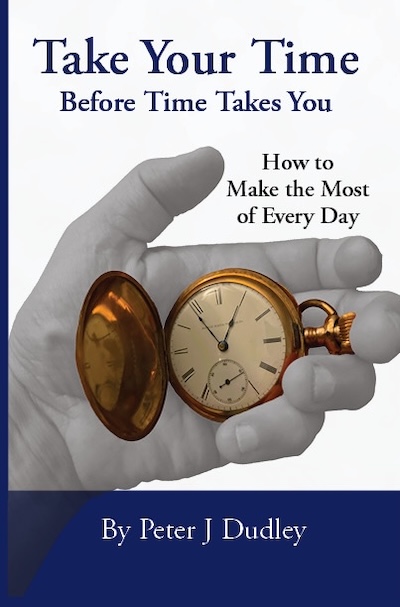
With Take Your Time Before Time Takes You, learn to make the most of every day through thought-provoking exercises and perspective-twisting stories. Get it now in paperback or ebook, or download the introduction now for free.
“It changed my life.” – TP, client
“A go-to guide for people who want to improve their lives but don’t know where to start.” – MJ, earlier reviewer

RELIT: How to Rekindle Yourself in the Darkness of Compassion Fatigue gives practical, actionable advice on avoiding and overcoming compassion fatigue and caregiver burnout. My chapter explains how I stay centered and focused so I can give every client my best, every time.
Download my chapter for free: Show up. Try hard. Be nice.
Or just go buy the whole book. It’s worth it.