Strategic Planning Should Build the Future, not Describe it
Click here for the TL;DR
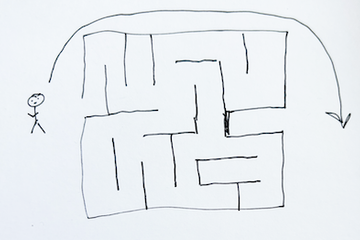
Non-profit strategic planning often fails because it results in a beautiful description of a fictitious future———shelfware that assumes the future will simply cooperate with the plan. A useful strategic plan isn’t a fixed roadmap but a clear system for conditional decision-making. True strategy means preparing for action as the future unfolds so you know when and how to pivot when things don’t go as predicted. Instead of focusing on fixed milestones, describe the actions you will take, in the order they need to happen, that will ultimately lead to the outcome you hope to achieve.
A lot has been written about why nonprofit strategic planning fails. Mostly they blame execution and inattention, but I think it’s because most strategic plans are not strategic plans at all.
Every organization starts with a vision for the future. For example: Every adult has a high school education is a vision. So is A chicken in every pot.
After the organization adopts a vision, it then must assess the world today and build a mental model of change for how the world gets to that vision. The organization then decides where they fit in for effecting that change. This becomes the organization’s mission.
If your vision is every adult has a high school education, you might identify a plethora of problems to overcome and opportunities to chase. Everything from kindergarten readiness to third grade reading levels to access to good dental care. You could go big and tackle them all, or you could pick a lane and focus your efforts. Either way, what results is your mission. Maybe it’s to provide books and literacy support to parents of all preschool aged children.
Once you’ve settled on your organization’s mission, you then build a strategy to accomplish that mission.
Here’s where strategic planning can quietly lose the thread.
How Strategic Planning Usually Happens
Most boards will set aside a special time for Strategic Planning. This can be anything from a regular board meeting to a two-day offsite retreat under the careful guidance of a very expensive consultant. But even a skilled consultant can facilitate a process that results in an impressive document without much use.
They’ll first determine whether the vision and mission are still relevant. This should be a short discussion because if your vision and mission aren’t relevant, you shouldn’t have scheduled a strategic planning session. Why would you want a plan for something that’s not worth accomplishing?
That part of the meeting should be very short, even perhaps pro forma. If your consultant is very expensive, however, the board will probably spend a lot of time “fine tuning” the vision and mission with precise language through facilitated group wordsmithing.
From there, the board often gets into the heart of Strategic Planning. In most cases, this consists of
- identifying three to five major goals or priority areas
- enumerating objectives under each of the major goals
- creating an implementation framework, which might include a timeline, naming of responsible parties, milestones to be achieved, and even perhaps immediate next steps
So far, so good. We’re talking SMART goals for the milestones. An owner identified for each outcome… a plan that every board member can confidently say describes the future they envision.
And that is the problem.
Many Strategic Plans are Neither Strategies Nor Plans
The plan beautifully describes a fictitious future, but it is neither truly a strategy nor truly a plan.
One way to tell if you have a strategic plan is if you can look at the tasks ahead of you and say to yourself, “I trust the process. If I do these tasks, the result I want is likely to happen.”
A strategy is a set of choices that illustrate how you think you will create the future you envision. Choice is the operative word here. “We will increase revenue by 10%” is not a strategic choice. “We will use a highly targeted approach in our sales process” is a strategic choice. A strategy is a collection of those choices that, when applied to any decision in the future, make the decision clear and repeatable. Your strategy predicts that when you follow these strategic choices, the desired outcome will result.
(Here I feel compelled to note that having a strategy does not guarantee success. In a good strategy, the predictions are correct and complete; in a bad strategy, the predictions are incorrect or incomplete.)
A plan is a commitment to specific actions that will execute on the strategy. The plan says who will do what in what sequence using which resources. “We will increase revenue by 10%” is not a plan. “Susan will invite 20 highly qualified prospects to our informational event, then Rick will follow up with any who attend” is a plan that executes on the strategy of “a highly targeted approach in our sales process.”
How Such Non-Strategic Non-Plans Fail
Most strategic planning meetings result in something like this:
- Strategic Priority 1: Increase impact by 25% in three years
- Strategic Priority 2: Expand service area into three neighboring counties
- Plan: Grow revenue by 5% in year 1, 10% in year 2, and 10% in year 3. Lease new offices in two neighboring counties in year 2, and a third in year 3
That’s oversimplified, but when you boil down the plan to its foundational components, what’s left will look something like that.
Looks great, right? It seems to fulfill every letter of SMART Goal: Specific, Measurable, Achievable, Relevant, and Time-Bound.
But in reality, all that “strategic plan” provides is a beautiful description of a fictitious future. There are a ton of assumptions built into the Achievability of that plan. Elections, pandemics, technology advancements, staff turnover… a lot of things in the future could cause a problem.
Ask yourself, “What will we do if our assumptions turn out to be wrong?” If the answer is, “We’ll rethink the plan,” then you’ve most likely got a well-articulated hope or possibly an educated projection. But it’s not a strategic plan.
If your strategy requires the future to cooperate with your assumptions, it’s not really a strategy. If your plan requires events outside your control to unfold in a certain way, it’s not really a plan.
The Board’s Role in Strategic Planning
When organizations create strategic plans that sit unread on the shelf, it’s largely because their strategic planning process resulted in an aspirational projection full of assumptions and hope.
And that is fine! It’s wonderful! It’s what a board should perhaps be doing!
But it’s not a strategic plan. A good strategic plan doesn’t describe the future that will come to be; it prepares the organization to take decisive action as the future unfolds.
How do you know whether to lease new offices if you fall short on your revenue increases? What happens if you accidentally increase revenue by 90% in year one? Will you wait two years to lease that third office just because that’s what the plan said? How can you tell what to do?
A useful strategic plan that won’t end up as shelfware would make the expansion clearer. The intention is to expand to three neighboring counties through increased revenue, allowing leasing of new offices. It’s a great intention.
Many strategic plans stop after defining the intentions. Most go one step further to create the ideal roadmap to the intentions, but stop there.
Few go all the way and lay out the choices and decision-making processes that will result in a clear sequence of actions.
A better strategic plan in my example above is one that lays out the intentions (the two strategic priorities) and then indicates what conditions will need to exist for those intentions to become real. Instead of “grow revenue 5% in year 1,” the plan should specify “when revenue has grown 5%, the board will evaluate expansion with a new office; when revenue has grown another 10%, the board will evaluate expansion through a second new office.”
That is a strategic plan. It stays in the realm of strategy———how and when decisions are made, and by whom———and it works as a plan by creating action commitments instead of aspirational milestones. And it detaches execution from the whims of the future.
When the Strategic Plan Goes Bad
It’s fun to wordsmith a beautiful description of an aspirational future. It feels good to imagine success and write it down as if it is an inevitability. Board members love that shit. Give it to them. It helps them feel engaged and enthusiastic. (I know; I’ve served on a few boards.)
But writing down a goal is not the same as doing the things required to achieve that goal.
So, when a board produces a “strategic plan” under the guidance of an expensive consultant, and that plan goes unfulfilled, the disappointment and discouragement can be pointed at all the wrong things.

Blame starts to be thrown around. The board might blame the staff or ED for failing to execute, or the staff might claim the plan was doomed from the start. People get defensive. Who could have foreseen a global pandemic? Who could have foreseen the CDO quitting to care for her ailing mother? Who could have anticipated the new administration cutting billions in grant funding? Things beyond our control were to blame!
Organizations with solid strategic plans focus on decision-making and success sequencing, not goal attainment. This makes them far more nimble and adaptive when something changes. It avoids defensiveness and blame by putting the emphasis on strategy and sequence instead of outcomes.
Why it’s Okay to have an Ineffective Strategic Planning Meeting
Do not just hand strategic planning over to your board.
In many organizations, the staff and ED are far better equipped than the board to create a workable plan. They are the experts. They know what frictions exist and what actions work. Board members are typically highly accomplished in their own field, but their lane is high level guidance and oversight.
If you have a board that truly understands strategic planning and also understands the nuances of the day-to-day of the organization’s business, then absolutely rely on them for input on the strategic plan. They can be an incredible asset. Every organization should strive to have that kind of board.
In any case, you want your board members engaged, enthusiastic, and supportive. One way to do that is to give them an opportunity to be involved in talking about what the future could look like. Encourage them to think big, to imagine what could be. Give them a reason to see themselves as part of making that happen.
But separate that exercise from strategic planning. Both are important, and both have value, but they are not the same thing.
When organizations get that wrong, the effects of that mistake show up not just as wasted money on an expensive consultant, but also in degraded trust between the board and the staff, and frustration when the plan is disconnected from the reality of day-to-day staff experience.
Let’s Review Your Plan and Process
If you’re a board chair or ED, mention this article in an email to me at peter@graybearcoaching.com, and let’s schedule 90 minutes to review your strategic plan together.
Or just grab an hour on my calendar to see what it would be like to have me at your side as your executive coach and trusted advisor.
Other Things to Do
Download a free chapter from one of my books. Or, learn about workshops and trainings that Antoinette and I provide for your staff, board, or club.
With Take Your Time Before Time Takes You, learn to make the most of every day through thought-provoking exercises and perspective-twisting stories. Get it now in paperback or ebook, or download the introduction now for free.
“It changed my life.” – TP, client
“A go-to guide for people who want to improve their lives but don’t know where to start.” – MJ, earlier reviewer

RELIT: How to Rekindle Yourself in the Darkness of Compassion Fatigue gives practical, actionable advice on avoiding and overcoming compassion fatigue and caregiver burnout. My chapter explains how I stay centered and focused so I can give every client my best, every time.
Download my chapter for free: Show up. Try hard. Be nice.
Or just go buy the whole book. It’s worth it.