They’ll Fill in Every Blank You Leave Them
Click here for the TL;DR
The best communicators know what details to share and what to leave out. But leaving out details creates blanks that other people will fill in. Make sure you know what blanks you’re creating and what the consequences of leaving them unfilled are. Learn the five ways we create blanks and how they can come back to bite us. And learn the five questions to ask when communicating to make sure you have as little miscommunication and misunderstanding as possible.
Anyone who grew up with Mad Libs knows that filling in a blank with the wrong word can lead to hilarity.
For National Family Caregivers Month, I asked Gemini to create a fill-in-the-blank story about caregiving. Have fun with it! Or have your favorite AI create one for you.
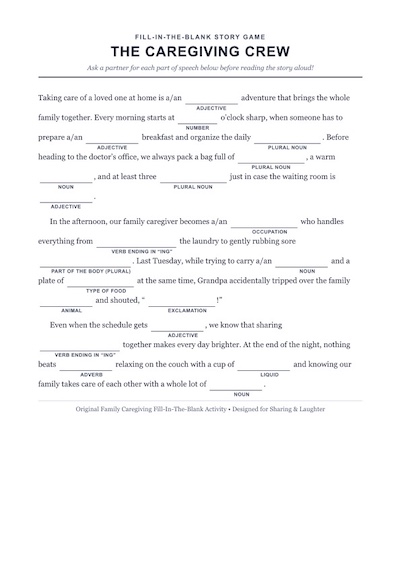
If ten different people fill that out, they’ll create ten different stories. Some will sound hilariously surreal. Others may sound on-the-nose tragic. Still others might end up mundane. It’s incredibly unlikely that any of those ten, however, would match your story exactly.
This is where a lot of caregivers (as well as managers and executives) go wrong. They leave blanks for people to fill in for themselves—intentionally or otherwise.
The thing about leaving blanks for people to fill in for themselves is that people fill in the blanks for themselves… whether they know they’re doing it or not.
A classic example can be summed up with, “I thought you were watching the baby!” This happened to me when my first was barely crawling. I said, “I’m taking the laundry downstairs,” then took the laundry downstairs. The blank I left unfilled was “and my hands are full so I can’t close the baby gate.” The way my wife filled that blank was “and Peter will close the baby gate because of course that is what a responsible person does and he knows I am busy doing something else.” Long story short, disaster was averted at the last second, and we both learned a very valuable lesson.
Why We Leave Blanks to be Filled
Unfilled blanks come in several forms. Some are entirely benign. Some can cause real trouble. In my experience, there are five main reasons we leave blanks for others to fill.
1. We simply don’t see the blanks
Sometimes we just don’t know about something we are leaving undone. One example might be your digital estate. We all know that when we write a will, we can assign how all our earthly possessions should be distributed after our deaths. But many of us have some kind of digital estate as well. If you’ve ever published an ebook on Amazon, for example, that’s a property of value you own. But you might not even realize you’re leaving a blank unfilled: “Who owns this ebook when I die? What happens to it?”
2. We assume everyone sees the blanks the same way we do
This is probably the most common reason families disintegrate into conflict through caregiving situations. Everyone in the group can see the blank in the story, and everyone in the group thinks the answer is obvious.
When dad falls, _______ will step in to ________.
Or
When mom dies, ________ will ________ her house.
If you’re in a situation where these questions might come up, perhaps turn to your favorite AI, give it all the things you can think of that you might worry about, and ask it to create a Mad Libs style fill-in-the-blank story. Then at your next family gathering, give everyone a printout and have them write their real (not funny) answers in the blanks. That should create some interesting discussion.
This is why this week’s SNL skit about “Sister” is so hilarious and tragic.
3. We don’t want to overwhelm them
Part of being a good communicator is knowing what details to leave out. If you tell everyone everything, you’ll overwhelm them and also risk diluting the importance of the things that they really need to hear. So, it’s actually a good idea to leave out unnecessary detail. Information overload can be as damaging as a lack of information. Every bit of information left out, however, is a blank that they will fill with their own assumptions.
A corollary to this is when we don’t want to overwhelm ourselves. Sometimes it feels easier to not tell a complicated thing because then we might have to get deeper into the weeds. Keeping it out might be the right choice for your own mental health, or it might create blanks that they fill in that lead to a bigger headache down the road.
4. We want to protect them from suffering
Especially in caregiving situations, the caregiver may withhold information in an effort to shield others from the pain they might feel from hearing it. Sometimes this is an effective mercy. It does, however, leave blanks for others to fill in.
For example, an elderly wife may hide her husband’s cognitive decline from their grown children so they can continue going about their lives without feeling the sadness of the situation. The adult children are left to fill in the blanks for themselves, and they will. This usually ends up worse in the long run because it doesn’t eliminate the sadness and suffering; it simply changes its shape and timing.
5. We want to seem like we have it all together
Those of us who have some pride want people to think we have things under control. So we present the situation in the way we think we want people to see it. But really what we’re doing is erasing some facts (e.g. how hard we had to work) and replacing those facts with blanks for others to fill in with their own narrative.
This is how someone can step into crisis and solve problem after problem for months on end, and over time receive even fewer offers of help. They just get more and more exhausted, wondering why no one is showing up to help. But everyone has filled in the blanks with the story that you’ve got it all covered and don’t need (or want) anyone’s help.
Be Intentional About the Blanks You’re Leaving
We all have to leave blanks for others to fill in. Life would be impossible if we communicated everything, all the time, to everyone. Imagine doing that, but also everyone around you also doing it. Chaos! Survival requires we filter out most of the noise, which leaves us all to fill in the resulting blanks based on our knowledge, assumptions, biases, and experience. Mostly we’re pretty effective at this.
We also make societal rules to reduce the blanks we have to fill in, by removing assumptions and guesswork. For example, when driving you are expected to stop at a red light. This helps everyone else not have to guess what you’re going to do.
The real power in clear communication is knowing when, how, and what to say… and what to leave out. When thinking about whether or not to include or exclude some fact or story, here are five questions that can help. They are all deceptively simple, however, and still leave a lot of room for bias and fear to shape your answers. That is, communication is an art that requires skill, practice, and great situational awareness.
1. Is this necessary to say at all?
Is the information you have necessary for the other person to know? This is not as simple as it sounds because you need to understand what blanks you create by leaving it out. But if you have too many things to share, dropping the few that are truly and unequivocally unnecessary will keep the spotlight on the things that do matter. “The baby gate is open” may be an important fact, as is “I am going downstairs.” The bit about the laundry was true but unnecessary.
2. Is it necessary to say now?
The information may be something everyone needs to know, but do they need to know it now? The best communicators deliver information at its moment of highest relevance. It may be very important for everyone to know you’re planning on moving across the country to care for your aging mother, but it may not be necessary to tell everyone right now.
3. What might go wrong if they don’t have this information?
This seems a variation of “is it necessary to say at all,” but it’s actually different. This question explores what might happen if others are left to fill in the blanks for themselves. You don’t have to tell everyone that mom had another fall. But if you go long enough not sharing something that doesn’t need to get shared, people may assume that mom is not falling at all.
This happens more often than we think because if we see a pattern developing but haven’t been sharing that the isolated incidents have occurred, then no one else will be able to see the pattern. Humans often forget what we shared and what we didn’t, so we may expect everyone else to understand the pattern even though what we gave them was a blank to fill in for themselves.
This is also relevant in the example of the person who keeps solving crises without letting on how much they’re sacrificing in the process.
4. How might someone else misinterpret this?
It’s not just important that you tell someone the thing, it’s also important how you tell it.
Miscommunication is often based in two people using the same words to mean different things. This is how “we all want what’s best for Dad” can become several different stories when we each explain what the word “best” actually means to us. For some, it might be independence (another vague word). Others might think it means comfort, or companionship, or longevity.
Avoid using vague words or words that carry a lot of baggage with them. Be as clear and precise in your language as possible, and think about ways in which the words you’re using might be misinterpreted.
5. How can I confirm they aren’t misinterpreting?
The worst way to ensure someone understands what you said is to ask if they understand what you said.
The best way to ensure someone understands what you said is to ask them to say it back to you. If they repeat your words, you get to listen for the blanks you created. If they restate it in their own words, you get to hear how they interpreted what you said and notice any deviation from what you meant.
This last question goes both ways. You should get used to confirming your understanding of what others say. It’s possible you’ve filled in their blanks wrong and are leaving the conversation thinking you’re on the same page when you are, in fact, leaving with two very different stories. All it takes is to seek confirmation of how you interpreted it. It’s worth the effort.
What Blanks Are You Creating?
The holidays are a great time to practice these communication skills and raise some questions that might be going unanswered. Grab time on my calendar and we’ll work out a way to open up some new conversations.
I help people make the most of every day. I help people live creatively, lead confidently, and care courageously. I am no wiser or smarter than the ancient gurus and sages, but I am a skilled and experienced practitioner of synthesizing all that wisdom into a version that is most useful to the person sitting across from me. That’s a skill based on innate talent, perpetual study, thousands of hours of practice, and a long, deep, rich life of diverse experiences.
Book us for Your Workshop
We would love to do our workshops for your team, staff, conference, or other group. We can build a custom workshop for your needs, on topics from nonprofit board development to powerful communications to overcoming burnout.
Over the past several months, our two most popular workshops have been
- Overcoming Compassion Fatigue
Compassion fatigue and burnout can affect everyone. We help individuals become more resilient and capable of avoiding and overcoming compassion fatigue. We help teams improve their culture and habits to reduce burnout. And we help leaders learn what causes burnout and compassion fatigue and how they can protect their teams from it while giving them the support they need. - Flourishing Through Caregiving
Caregiving is one of the hardest things any person can be called on to do, but it can also be filled with beauty, meaning, and purpose. Without getting sanctimonious or leaning on toxic positivity, we help individuals and families take on a caregiving responsibility without unnecessarily sacrificing their careers, their own health, their relationships, or their identity along the way. Centered around our Three Cs of Caregiving, this workshop covers aspects of project management, clear communication, team culture, personal resilience, and learning to be in control of your emotions instead of governed by them.
For more information, drop me a line with what you’re interested in, or just book an exploratory call on my calendar now.
Other Things to Do
Download a free chapter from one of my books. Or just buy the whole book now. You probably will after reading the free chapter anyway, so why wait?

With Take Your Time Before Time Takes You, learn to make the most of every day through thought-provoking exercises and perspective-twisting stories. Get it now in paperback or ebook, or download the introduction now for free.
“It changed my life.” – TP, client
“A go-to guide for people who want to improve their lives but don’t know where to start.” – MJ, earlier reviewer

RELIT: How to Rekindle Yourself in the Darkness of Compassion Fatigue gives practical, actionable advice on avoiding and overcoming compassion fatigue and caregiver burnout. My chapter explains how I stay centered and focused so I can give every client my best, every time.
Download my chapter for free: Show up. Try hard. Be nice.
Or just go buy the whole book. It’s worth it.