Self-Confidence in Two Quotes
Click here for the TL;DR
This article explores personal agency, executive presence, and self-confidence through two foundational principles: comfort zones as self-imposed boundaries and confidence as a psychological outcome based on empirical evidence rather than emotional hype. Grounded in five years of professional coaching experience across nonprofit leadership, executive career pivots, and caregiver support, the author introduces practical resilience tactics—such as the Success Jar—to help leaders expand their agency, manage impostor syndrome, and build sustained confidence through real-world action.
On Saturday, we presented our Flourishing Through Caregiving workshop at the Oregon Cancer Foundation’s Topics in Cancer conference. We also handed out Small Wisdoms scrolls in the exhibit area.

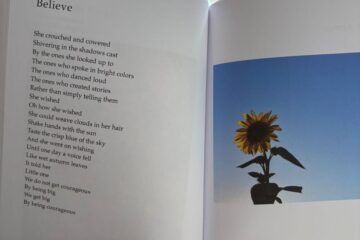
I probably wrote 50 different messages on those scrolls. Two in particular, though, have been demanding my attention this week.
I’m not arrogant enough to think I invented the concepts on those two scrolls. Nor do I believe I’m the first to string words together in these ways. But I did come up with them independently, so I claim them as my quotes. You can claim them as your quotes if you want. This isn’t about proper citation or promoting how clever I am (though I do want you to think I’m clever).
This is about your personal agency and self-confidence.
Now, I have never known a quote powerful enough to change someone’s entire way of living. As I’ve written before, confirmation bias plays a huge part in the quotes that speak to us. The small wisdoms that would truly change our lives often go unnoticed, while we horde the ones that reaffirm our existing worldview.
Still, a well-timed pearl of wisdom, received with an open mind, can inspire parts of you that may have been dormant or hiding in the wings, waiting for their cue.
These two seem particularly relevant for a lot of people right now.
The Imaginary Comfort Zone
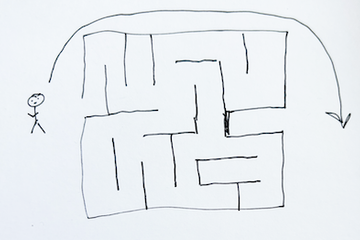
A comfort zone is a box with imaginary walls.
This one is pretty clear. The only thing keeping you inside your small comfort zone is you. The “box with imaginary walls” phrasing may bring to mind the traditional mime inside the invisible box, but I think instead of this dog waiting at the closed gate after the entire fence has been removed.
There is so much fun and joy to be had beyond the walls of our comfort zone. The walls that we think we are keeping us safe.
Those walls, however, are invisible and imaginary to everyone else. Other people see right through and wonder why stay in such a small area when we have such greater capability. Those walls don’t provide as much safety as we think they do. Instead, they hold us back from growing.
I think this quote has been haunting me because it’s a reminder that if I’m the one imagining these walls in the first place, I can simply choose to imagine them around a much larger zone.
The imaginary walls still exist in my mind. I can still keep myself “safe” within them. But I am fully capable of changing the size and shape of my comfort zone at any time. Because they are imaginary, and I’m the one doing the imagining.
Easier said than done, of course. Which is why this next quote keeps prodding me, too.
A Fact-Based Confidence Model
Confidence is a feeling based on facts, not a fact based on feelings.
A lot of leadership and life coaches seem to be little more than very loud cheerleaders. Own your power! You are worthy! They’re all about inflating confidence.

I have found that can be useful in short bursts. Like drinking an energy drink to go just a little faster and farther.
The problem with energy drinks and cheerleading is that they don’t change who you are or how you feel about yourself. You can keep up the charade for a while, but the farther you go on this kind of artificially inflated inspiration, the more you’ll feel impostor syndrome behind the facade.
This is because confidence is a feeling based on facts, not a fact based on feelings. You don’t become confident because you manufactured feelings that somehow add up to confidence. That’s not confidence. That’s bravado. Or perhaps unearned arrogance.
You become confident because you have the evidence and receipts to know you are capable. Confidence is earned.
I think back to every time I made a major career pivot. Each time, I was stepping into an arena that was entirely new to me in some way. I did not feel especially confident in those early days of the new arena.
As I accomplished more things, however, my confidence grew. I earned the confidence by building up a list of facts and evidence that I was capable.
Confidence did not precede accomplishment. It’s the other way around. I didn’t accomplish all those things because I was confident I could do them. I accomplished them because I tried, learned, and tried again. Confidence follows accomplishment.
Build Confidence by Trying and Doing
Too often, we hold ourselves back from trying something because we lack the confidence that we think is required. But confidence is never a requirement to accomplish a task. The task does not care how you feel about it.
Confidence is built by trying and doing. Wisdom is built by trying and failing.
One of the small tools of resilience we teach in our Flourishing Through Caregiving workshop is a Success Jar. That’s just a jar in which you keep reminders of your successes. Write down the things you’ve accomplished or are proud to have done, and put them in a jar. If you’re ever lacking confidence, pull out a few and contemplate them. Or just look at the jar full of slips of paper, and realize how much you’ve accomplished, in how many different arenas… and how you felt about them before you accomplished them. You are proud of those accomplishments not because they were easy but because you did them even though they were challenging.
Confidence is a feeling based on facts. Your successes are those facts.
How My Own Confidence Has Grown
I look back at my five years of coaching and can see how far I’ve come. How many people I’ve helped. How many diverse, disparate, difficult situations I’ve helped people through. Do I have a 100% success rate? Of course not. If I did, then I’d be inside a very small imaginary box indeed.
Part of my success is raw talent, temperament, and personality. Part of it is the vast diversity of lived experience I have. Part of it is intense study and practice with some of the best in the world.
Last week, I reconnected with a good friend I hadn’t seen in a few years. She said something like, “Your vibe is different. It’s clear you’ve found your path.”
I think that’s why I’ve been reflecting on these two quotes this week.
When I started this latest career pivot into coaching full time, I really didn’t know what I was getting into. Nearly five years later, I have a mountain of accumulated facts on which my confidence is built.
I tried. Sometimes I failed and gained wisdom. Sometimes I succeeded and gained confidence.
Both help my clients today. And I’ll keep pushing those imaginary walls farther outward, because the more I try, the more clients I help. And the more I try, the more my future clients will benefit from the wisdom I gain.
What Are You Holding Yourself Back From?
I help people make the most of every day. I help people live creatively, lead confidently, and care courageously. I am no wiser or smarter than the ancient gurus and sages, but I am a skilled and experienced practitioner of synthesizing all that wisdom into a version that is most useful to the person sitting across from me. That’s a skill based on innate talent, perpetual study, thousands of hours of practice, and a long, deep, rich life of diverse experiences.
If you want to tap into that, grab time on my calendar. Let’s talk.
Book us for Your Workshop
We would love to do our workshops for your team, staff, conference, or other group. We can build a custom workshop for your needs, on topics from nonprofit board development to powerful communications to overcoming burnout.
Over the past several months, our two most popular workshops have been
- Overcoming Compassion Fatigue
Compassion fatigue and burnout can affect everyone. We help individuals become more resilient and capable of avoiding and overcoming compassion fatigue. We help teams improve their culture and habits to reduce burnout. And we help leaders learn what causes burnout and compassion fatigue and how they can protect their teams from it while giving them the support they need. - Flourishing Through Caregiving
Caregiving is one of the hardest things any person can be called on to do, but it can also be filled with beauty, meaning, and purpose. Without getting sanctimonious or leaning on toxic positivity, we help individuals and families take on a caregiving responsibility without unnecessarily sacrificing their careers, their own health, their relationships, or their identity along the way. Centered around our Three Cs of Caregiving, this workshop covers aspects of project management, clear communication, team culture, personal resilience, and learning to be in control of your emotions instead of governed by them.
For more information, drop me a line with what you’re interested in, or just book an exploratory call on my calendar now.
Other Things to Do
Download a free chapter from one of my books. Or just buy the whole book now. You probably will after reading the free chapter anyway, so why wait?
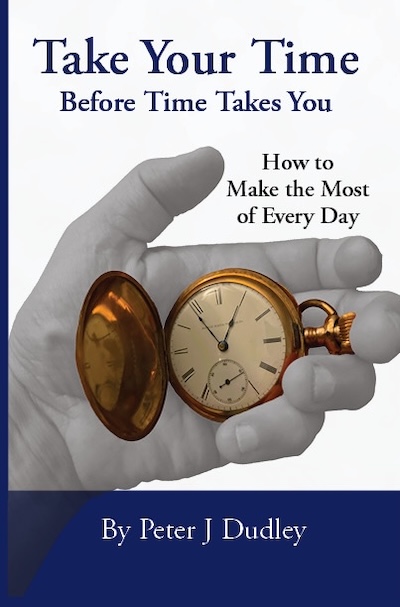
With Take Your Time Before Time Takes You, learn to make the most of every day through thought-provoking exercises and perspective-twisting stories. Get it now in paperback or ebook, or download the introduction now for free.
“It changed my life.” – TP, client
“A go-to guide for people who want to improve their lives but don’t know where to start.” – MJ, earlier reviewer

RELIT: How to Rekindle Yourself in the Darkness of Compassion Fatigue gives practical, actionable advice on avoiding and overcoming compassion fatigue and caregiver burnout. My chapter explains how I stay centered and focused so I can give every client my best, every time.
Download my chapter for free: Show up. Try hard. Be nice.
Or just go buy the whole book. It’s worth it.