Fill the Emptiness with Intentional Nothing
Click here for the TL;DR
Life has too much clutter! I love mental white space for cognitive focus and emotional resilience. Visual clutter and messy calendars are proven by neuroscience (including UCLA and Yale studies) to change information flow in the brain and elevate stress hormones like cortisol. Sometimes you need to create blank spaces—and leave them blank—to prioritize what’s really important, and to let your brain and body do what it needs to.
We’ve had a blank sheet of flipchart paper on our wall since February. It wasn’t always blank… we used it as an idea board, taping up notes and post-its for a project we were considering.
When we decided not to do that project, we took down the notes but left the flipchart paper up. It wasn’t that we wanted a piece of blank paper on our wall. We just didn’t know what to do with the paper if we took it down. So there it stayed.
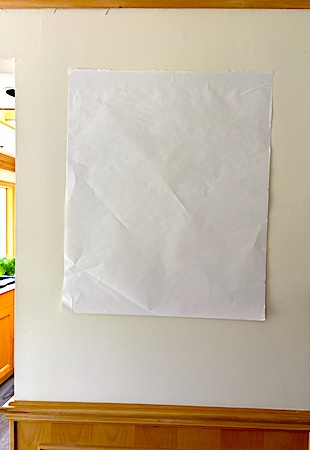
Now, there’s something about this paper that is not exactly art and not exactly blank space.
If the wall were empty, it would want something put up there. A photo collage, or a painting perhaps. But it’s not empty, even though what’s there is emptiness. It’s an intentional nothingness.
It’s like our decor got serious about mindfulness and created intentional visual white space. Literally.
The Neuroscience of Clutter, Stress, and Information Flow
There’s a lot of study about attention and how our brains deal with clutter, distraction, and interruption. For example, UCLA researchers observed a correlation between cortisol levels and clutter, though they didn’t study causality (does clutter cause stress, or does stress cause clutter?). A Yale study found that visual clutter affects how information flows in our brains.
So as we talked this morning about mindfulness practices and creating “mental white space” to enhance resilience, that piece of flipchart paper came to mind.
The Rauschenberg Erasure: How Empty Space Holds Possibility
Some might argue that the blank paper, like a blank canvas, implies a sense of possibility. It’s a space meant to have creativity poured into it, to fill the blank space with something new.
In a way, that’s exactly what this particular piece of flipchart paper is. Originally, it was an idea board for a project. Like the Rauschenberg erasure of a De Kooning drawing, it started as a blank piece of paper, briefly became something else, and is now once more a blank piece of paper.
So perhaps this visual white space is not emptiness. Instead of a blank wall wanting a picture, it’s a future project wanting an idea board.
Sometimes it feels like that. Sometimes it feels like a piece of art in its own right. Sometimes I don’t even see it.
It is an intentional nothing, a visual slow exhale as I walk through the room.
Mental De-Cluttering: The Power of Saying No to Distraction
It’s also a reminder of the project we decided not to go forward with. That was an intentional decision which created much-needed space in our calendars and in the mental pictures of our lives. Life was too cluttered for that project at that time.
The flipchart paper represents the possibility we created. We are leaving that space intentionally blank until the right thing arrives to fill it in the proper way.
I think there’s also a parallel here with how phones fill the otherwise productive empty space our brains need. I find when I finish a task, my mind often goes into a brief “nothing” space—done with the last task, not yet into a new task.
If my phone is nearby, I’ll find myself picking it up and waking it even though I have no purpose for the action. I do this when ads come up while watching a show, for example. I mute the ads because they are annoying and distracting, and I replace that annoying distraction with…
I could instead hold the empty space to give my brain a rest, or let it use whatever energy it has on some background thinking, or literally anything other than filling that available space with mental noise.
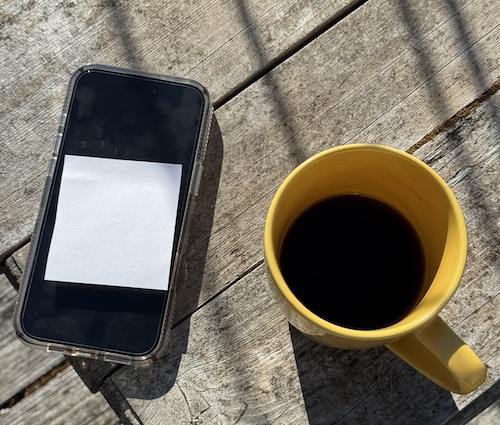
Maybe I’ll put a white post-it on my phone’s screen to remind myself of the intentional mental nothingness that could be available to me in those moments.
What Intentional Nothing Do You Need in Your Life?
Do you need to add intentional nothing in your calendar? Your physical space? Your love life? Your TBR list?
Sometimes resilience and productivity aren’t about cramming more into whatever you’ve got going on. Sometimes they’re about peeling away the things that get in the way of your highest priorities.
Set up some time with me to talk through it.
Or, if you’re a busy professional that also has a family caregiving obligation, check out the small-group cohort program we’re launching soon.
My Books
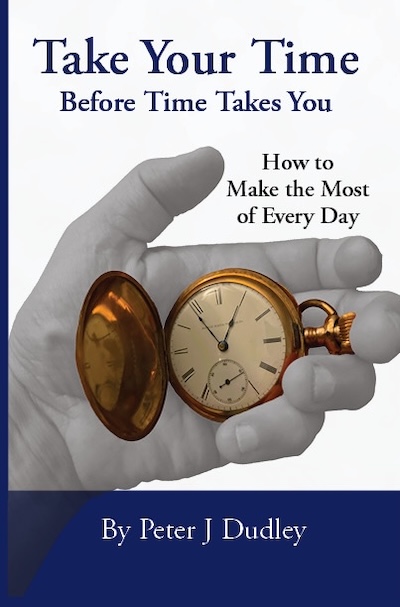
With Take Your Time Before Time Takes You, learn to make the most of every day through thought-provoking exercises and perspective-twisting stories. Get it now in paperback or ebook.
“It changed my life.” – TP, client
“A go-to guide for people who want to improve their lives but don’t know where to start.” – MJ, earlier reviewer

RELIT: How to Rekindle Yourself in the Darkness of Compassion Fatigue gives practical, actionable advice on avoiding and overcoming compassion fatigue and caregiver burnout. My chapter explains how I stay centered and focused so I can give every client my best, every time.
Download my chapter for free: Show up. Try hard. Be nice.
Or just go buy the whole book. It’s worth it.