Fixing “I don’t trust my team” with passive voice
Click here for the TL;DR
Strong leaders understand how trust is created and diluted in their teams. They know when to trust their teams to make good decisions in their absence. Weak managers often blame a lack of trust on the employees, though, misdiagnosing their inability to delegate by going from “I don’t trust my team to make good decisions” to “I don’t trust my team.” With a simple linguistic trick, good leaders flip the problem. Instead of “I don’t trust my team to make good decisions,” they say “I don’t trust good decisions will be made.” This places the blame where it usually belongs: on the manager, who is responsible for culture and delegation.
What decisions do you trust your team to make when you’re not in the room? That’s one of the most important question any leader needs to be able to answer.
The flip side of that question is perhaps more important: What decisions do you wish you could trust your team to make when you’re not in the room?
I have yet to work with a leader whose answer to that question is “none.” Every leader who can see a bigger vision knows there are ways their team could be performing better, doing more, or growing.
The Failing State of Engagement
In my 30 years in corporate and nonprofit leadership, I observed thousands of leaders in the wild. I learned by watching them and by making my own mistakes along the way. I saw personal bias, fear, and toxic positivity drive a lot of bad decisions (and some good ones).
I saw a lot of high performing employees suffer from those bad decisions. In my more recent coaching experience, I’ve seen the general state of management and leadership degrade. This is no surprise to anyone paying attention; Gallup says that only one in five employees worldwide feels engaged in their work.
Weak Managers Misdiagnose Culture Problems
Weak managers will blame workers for their feelings of disengagement. Strong managers know it’s leadership that creates the culture. And engaged cultures have a strong sense of trust.
Weak leaders also misdiagnose trust issues. “I don’t trust my team to make a good decision here” becomes “I don’t trust my team,” which then becomes “I need people I can trust.”
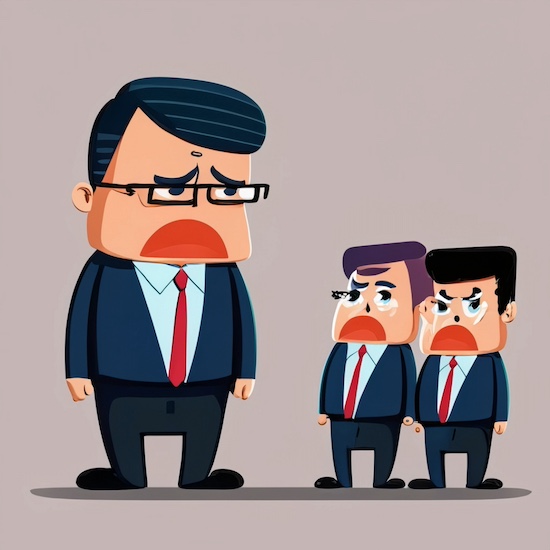
Sometimes that really is the answer. Sometimes you have the wrong people. When that’s true, you need to change the personnel.
Changing personnel, however, is often not the right remedy for “I don’t trust my team to make a good decision here.”
Changing out the people might not actually solve your problem. If the problem is cultural or in the leadership itself, changing personnel will perpetuate the problem while adding cost, wasting time, and eroding trust with other employees.
Use This One Simple Linguistic Trick
As a writer, I normally advise against using passive voice. (A quick primer: “People did things” is active voice; “Things were done by people” is passive voice.) Passive voice dilutes accountability and obscures meaning. It is also just harder to parse, which gets in the way of clear communication.
In the case of “I don’t trust my team to make a good decision here,” however, the passive voice may be the better option. Instead of that, try saying, “I don’t trust a good decision to be made by my team here.”
It may seem like the same statement, and technically it is. The team is still on the hook for a good decision.
The passive voice reframe takes the spotlight off the team, however, and shines it on the quality of the decision. This eliminates the lazy path for the leader—it’s no longer about the team being untrustworthy. Now it’s about the decision not being good. And that responsibility is squarely on the leader’s shoulders, no matter how you slice it.
A good leader can work with that. It opens up the analysis of where trust is failing. The leader may ultimately come to the decision that personnel need to be replaced, but at least they’ll go through a more rigorous and honest evaluation. They may find that their people are actually superstars being held back by poor information, lack of strategy, bureaucratic slop, or any number of other problems that would never be solved by changing out personnel.
What Decisions Are You Afraid to Delegate?
Delegation is the difference between being a manager and being an executive. Managers provide oversight and are rarely out of the room for important decisions. Executives have to create a culture where they know good decisions will be made without them because they can’t be in every room all the time.
When you’re ready to grow your executive ability, let’s talk. I’m not just a coach who has read about the concepts; I’m field-tested and have lived through pretty much any situation you are likely to face.
My Books

With Take Your Time Before Time Takes You, learn to make the most of every day through thought-provoking exercises and perspective-twisting stories. Get it now in paperback or ebook.
“It changed my life.” – TP, client
“A go-to guide for people who want to improve their lives but don’t know where to start.” – MJ, earlier reviewer

RELIT: How to Rekindle Yourself in the Darkness of Compassion Fatigue gives practical, actionable advice on avoiding and overcoming compassion fatigue and caregiver burnout. My chapter explains how I stay centered and focused so I can give every client my best, every time.
Download my chapter for free: Show up. Try hard. Be nice.
Or just go buy the whole book. It’s worth it.