Multitasking or thrashing? 5 things to help you focus.
No time to read this? TL;DR:
Multitasking is actually “task-switching,” which incurs a hidden cognitive tax. In computer science, a system is said to be thrashing when it spends more energy switching between tasks than completing them. To avoid this kind of thrashing (in, for example, leadership and caregiving), high achievers can apply five strategies: rigorous prioritization, the Pomodoro technique, slowing down, eliminating distractions, and strategic delegation.
That feeling of overwhelm doesn’t come from having too many things on your to-do list. It comes from trying to do several of them at the same time.
Humans can’t actually multitask at a functional level. We think we can, and often it seems like we can. I mean, who doesn’t scroll social media or play a game on their phone while streaming Netflix?
That’s not multitasking; that’s task-switching, and it dilutes your attention and drives down your effectiveness. You’re actually switching your attention from one task to the other faster than you can perceive the switch, so it feels like doing two things at once.
But there’s an efficiency tax in task-switching. Your attention (and therefore your effectiveness) gets diluted the more tasks you take on. You also spend energy switching tasks, and that spend adds up.
I learned this in my database class in college in 1986, and it was affirmed for me on the 10% Happier podcast this week. (Definitely worth a listen.)
What is “Thrashing” in Computer Science and Human Productivity?
Computer science has a term for overloaded task-switching: thrashing.
Thrashing happens when a system spends so much time swapping tasks that it can’t get any work done on any one actual task. Thrashing is pretty common in high achieving people.
Sometimes thrashing is externally induced, like in a workplace filled with interruptions—slack messages, email pings, texts coming in, coworkers popping their heads in, the boss wanting an update. I’ve had days in my career where I spent every moment of it acknowledging someone’s request and literally zero moments working on their requests.

Sometimes thrashing is self-inflicted, as when we fail to prioritize, treating all our tasks as high priority. For example, the primary caregiver for someone with a serious health issue might elevate every need to high priority and try to manage health, finances, nutrition, household, transportation, and many other things all at the same time. Constant task-switching. Thrashing.
The Hidden Cost of Multitasking and the Efficiency Tax
Our brains, just like a computer processor, can execute only one command at a time. The processor and brain are so fast, however, that to our conscious perception, it can feel like we’re doing multiple things at once.
Like holding a conversation while driving, or writing on a chalkboard while talking, or scrolling TikTok while watching a Netflix show.
An overloaded processor can overheat and begin to fail. An overloaded brain gets exhausted and overwhelmed, leading to all kinds of breakdowns—physical, mental, and emotional. But because we wear the illusion of multitasking like a badge of competence, we believe we are more efficient when working on many things at once.

But task-switching isn’t free. There’s an efficiency tax. Every time you have to unload one task and switch to another, your brain expends some energy to do that. It takes processing power to put away the data you’re working on and pick up the data you will work on next. This adds up. After a while, you feel exhausted even though you’ve only gotten a regular amount of work done.
Furthermore, as they talk about in the podcast I linked to above, all brain activity leaves behind some administrative residue. Sleep is when our brains clean up that residue in a kind of garbage collection. The administrative residue of task-switching piles up like pencil shavings, giving your brain yet more work to clean it all up while you sleep.
5 Strategies to Stop Multitasking and Reclaim Focus
There are a few simple solutions for an individual to create more focused attention.
- Use a timer
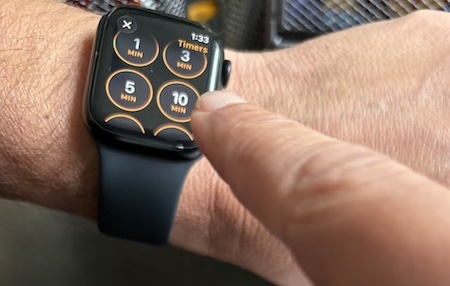
Define periods of focused attention by setting a timer (the Pomodoro technique). I use the timer on my watch. If I know, for example, that I have a meeting in 20 minutes and want five minutes to prepare, I’ll set my timer for 15 minutes. My brain then relaxes and can focus on the one thing in front of me.
- Prioritize effectively
When you’re under pressure, it can be hard to let go of some things that feel like a priority. Prioritization, however, is one of the most effective ways to manage your attention. Understand what is urgent and what is important, and then be rigorous about those boundaries. If something unimportant or non-urgent demands your attention, tell it to wait. - Slow down
It’s counterintuitive when you’re over-scheduled, but attention focuses better when you slow down. Rushing through tasks reduces creativity in problem-solving and can lead to higher error rates. As the old saw goes, if you don’t have time to do it right, when will you find time to do it over? - Turn off distractions
The worst invention in the history of creation is the bell that rings when someone calls you on the telephone. I learned this from the book Peopleware. For information workers, the authors figured it took up to 15 minutes to regain concentration after an interruption. Add in slack, texting, and other constant notifications, and we are living in a perpetual state of interruption, which means we rarely (if ever!) achieve a state of true concentration and flow. - Delegate
Delegating is like adding another processor to your computer system. Specialized delegation is like adding a graphics card to your computer, so complex and specialized tasks can be offloaded from the main CPU. Or you can enlist other people to act as parallel processors, delegating entire task sets to them. The key with delegation is to create the right interaction and integration points, and then to step away from the task completely. Let the other person do it their way.
Leadership Lessons: Reducing Interruption in the Workplace
If you’re the boss, eliminate multitasking. Create an environment with fewer interruptions and set clear priorities for your employees. Most workplaces are actively increasing notifications and interruptions under the mistaken idea that faster information flow increases productivity.
Faster information flow only matters, however, if the signal in that information stays high and the information is delivered precisely when it is most relevant. Otherwise, it’s just a lot of noise and ringing telephones disrupting concentration and distracting from the priority tasks. Information should be given when the receiver needs it, not when the person holding the information feels like telling it.
More important, as a leader you need to value these habits for yourself. Create your own boundaries and habits, and model the right sets of behaviors for your workers. They will follow your lead, not your instructions.
Applying Resilience to Caregiver Overwhelm
If you’re overwhelmed with personal tasks like caregiving, ditch multitasking and focus instead on prioritization first and foremost. In caregiving, every task seems like life-or-death. In reality, lots of things can be ignored completely when you’re in the right mindset with the right priorities.
For example, I visited the elder care facility where a loved one was living, and I saw a stain on the floor—dried orange juice! I could have gotten angry and assumed the staff were careless and inattentive. I knew the reality, however, which was that they were focused on providing the best care for the people, not the best care for the setting. This meant that sometimes, when there were simply too many things to do, it was far more important to spend a few quality minutes talking with the resident than ignoring the resident to wipe up dried orange juice.
When the stakes are astronomical, every little thing can feel like life-or-death. Examine your own beliefs and look at how fear may be coloring your decisions. When you get out of a reactive mindset, you can make more discerning choices about priority. You may find that many things you thought super important could fail entirely, and the end result would still be the same.
In the majority of cases, the suffering caused by feelings of overwhelm stems not from being truly overloaded but from making everything—even the littlest details—a high priority.
Get started focusing (and stop multitasking) right now
What are you obsessing about that can probably be put off until later? Or never done at all?
What is one thing that can be allowed to fail, even if that failure will feel bad?
Who are your allies, and what are their strengths? Can someone take some of your burden for you (without overwhelming them)? If so, can you hand that to them and accept the outcome without requiring it to be done your way?
How can you integrate a timer into your day today, to get one single task completed?
RELIT ebook free through April (extended!)

To get a free ebook of RELIT during the month of April 2026, download it from my web shop using the coupon code MakeBooksNotWar.
Connect with me
Schedule a consultation session or sales call now, or drop me a line.

With Take Your Time Before Time Takes You, learn to make the most of every day through thought-provoking exercises and perspective-twisting stories. Get it now in paperback or ebook.
“It changed my life.” – TP, client
“A go-to guide for people who want to improve their lives but don’t know where to start.” – MJ, earlier reviewer