Expand your perspective by questioning what you know
Click here for the TL;DR
Every explanatory model is inherently reductive, trying to simplify the complexity of reality to improve human comprehension and give us a shared way to talk about it. That means that no model is entirely true. A commitment to lifelong learning is a commitment to getting closer to truth across four distinct dimensions of knowledge: Taught Knowledge (vetted, institutional expertise), Foraged Knowledge (insights discovered in the wild), Observed Effectiveness (intuition and organic, real-world results), and Beliefs (our foundational models of reality). Collecting knowledge in these ways—while maintaining a healthy understanding of each one’s limitations—is the path to increased wisdom and resilience.
I had coffee with a new friend yesterday, and she stopped herself when she was about to bring God into the conversation. She tiptoed through her trepidation and ultimately asked what my religious views were.
I responded with some version of, “Is it helpful for you to know that?” When she said it would be, I had to think for a moment before replying. Not out of sensitivity, but out of a commitment to truth. What was my answer, really?
The Problem with Reductive Models of Reality
I don’t think a lot about how to answer the faith question. I do, however, frequently experience awe and reverence. Life is amazing. The universe is astounding. There is so much to wonder at and question and appreciate.
But I do not subscribe to any named religion. Every religion is a specific, human-created model created to explain the infiniteness of existence. All models are reductive. Models simplify complexity in order to improve comprehension and ease communication.
As religion is an attempt to explain things beyond human comprehension, I don’t accept that any one of them is Truth. I prefer instead to simply accept that there are wonders and truths beyond our perception, beyond our comprehension, and beyond description.
That’s what I told my new friend, and our discussion proceeded in delightful fashion.
Nothing is Completely True, but Real Truths Exist
I’m skeptical of anything that claims to be 100% true. Context, inherent bias, entrenched narrative, and the limitations of human knowledge and perception all constrict our ability to understand the fullness of reality.
Even so, we need to try to understand and explain things in order to learn more. That’s the main reason I write this blog. The process of writing helps me interrogate my own beliefs, explore interesting questions, and find words to explain my understanding.
Most of my blog posts contain claims about human nature, human behavior, how the universe or society work, how systems behave… I say a lot of things as if they are true. I hope you take them all with a sense that there is knowledge and wisdom in what I am saying, but there is also some risk that what I’m saying is incorrect or incomplete.
I never try to deceive. My partner and I talk a lot about making sure we don’t make misleading claims in our marketing materials or sales pitches. When we make a claim or assert a truth, it’s because we believe those things in this context, with our understanding, at this time.
Balancing Human Expertise with Lifelong Learning
Given all that, we do know a lot of stuff. In our books, our workshops, and our one-on-one coaching, we use dozens of proven models that get results. We know some things about how the brain works and reacts. We know some things about the nervous system, corporate culture, family dynamics, and lots of other things.
That said, we are also committed to learning every day. Not just because lifelong learning is highly correlated with longevity, but also because we are committed to getting closer to truth.
The Four Dimensions of Knowledge: A Framework for Wisdom
So, when I put up a blog post or we present a concept in a workshop, those things are based on four sources:
1. Taught Knowledge
We actively seek the teachings of experts in various fields. For example, I just wrapped up a five-day mastermind retreat where I learned and practiced with other world-class coaches. During the retreat, our instructors taught us specific models of human behavior with long histories of clinical use.
Over time, I have developed enough expertise and experience to be one of the teachers of the things I’ve learned. For example, I now teach coaches how to help people through caregiver burnout, and I teach people how to self-publish books.
The risk of taught knowledge is that it comes from an establishment which has an entrenched interest in not being contradicted. Once you stand on stage and claim to be an expert, you begin to lose your ability to learn because you develop an attachment to what you are teaching.

2. Foraged Knowledge
In addition to official instruction, we all encounter knowledge and wisdom in the wild during our day-to-day wanderings. When people share their life lessons or the things they’ve heard on podcasts or read in books, I listen. Especially if it’s a new thought that expands the way I might see reality. I learn so much from colleagues and clients this way. Many of my clients tell me about books they’ve read or classes they’ve taken that help me expand my own knowledge.
The risk of foraged wisdom, however, is that it’s often unvetted, filtered like a game of telephone. Someone hears something on a podcast, then they share that with someone else, and eventually I hear some version of it that still contains the original nugget of truth but maybe has mutated into something that isn’t true at all.
3. Observed Effectiveness
In coaching more than 500 individuals in thousands of hours of sessions, I have tried a lot of things that I had to make up on the spot. There’s a tremendous amount of intuition in coaching, and in the best moments it’s entirely free-form. I certainly deploy models and apply techniques, but ultimately every coaching session is an organic discussion that will flow the way it needs to.
Some of those things I’ve turned into official models that I use with others. This is how the Three Cs of Caregiving came to be, for example. That’s a framework we teach in our caregiver workshops that helps people shift their mindset to be more effective and less exhausted.
The risk with organically developed knowledge is that it arises in context and doesn’t always translate into other contexts. This is where academic or scientific research into these observations could help clarify the gaps and certify the solid parts.
4. Beliefs
My beliefs are baked into everything I write, say, teach, and coach. I can’t help it. My belief system is my model of reality. Your belief system is your model of reality. And as we know, all models are reductive.
The risk in consuming any kind of teaching or knowledge is that it might fuel existing beliefs that are not currently serving you well. If you encounter new knowledge that seems extraordinarily true, pause and check how it might be feeding your preconceived notions of how the world works.
When you encounter knowledge or wisdom that challenges your beliefs, pay attention. It may be an opportunity to expand or adjust your model of reality, which will in turn give you more tools for moving through life.
Challenge Your Model of Reality Regularly
I make it a practice to keep exploring, learning, and going into the world with curiosity. My conversation yesterday with my new friend was an example of that, as was my enrollment in the mastermind cohort. As is writing this blog post today.
How are you challenging your own model of reality today?
Connect with me
Schedule a consultation session now or drop me a line.
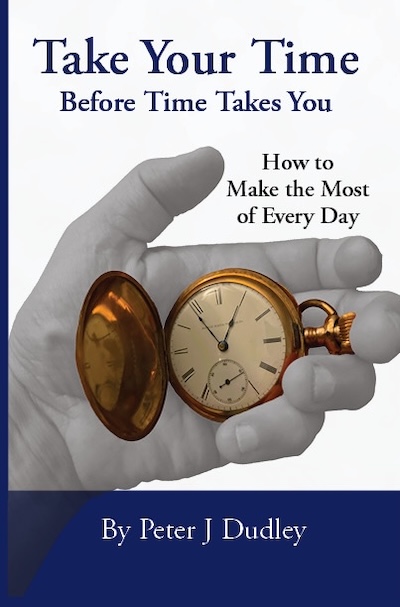
With Take Your Time Before Time Takes You, learn to make the most of every day through thought-provoking exercises and perspective-twisting stories. Get it now in paperback or ebook.
“It changed my life.” – TP, client
“A go-to guide for people who want to improve their lives but don’t know where to start.” – MJ, earlier reviewer

RELIT: How to Rekindle Yourself in the Darkness of Compassion Fatigue gives practical, actionable advice on avoiding and overcoming compassion fatigue and caregiver burnout. My chapter explains how I stay centered and focused so I can give every client my best, every time.
Download my chapter for free: Show up. Try hard. Be nice.
Or just go buy the whole book. It’s worth it.