Storytelling versus Communication
A lot of conflict, misunderstanding, and confusion come from mistaking storytelling for communication. They are not the same.
Communication transfers information. Storytelling creates connection.
Trying to transfer information through storytelling will frustrate everyone. Trying to create connection through communication will fall flat.
Good communication focuses on facts, clarity, precise language, and efficiency of information transfer. Storytelling focuses on engagement, building curiosity, emotional connection, and managed tension.
A skilled person can use the techniques of both storytelling and communication to powerful result. More often, however, people tend toward one or the other, and when it’s not working for them they compound their problems by doubling down on their default method instead of deploying the other technique.
A great example is the fundraising gala I attended a few years ago, when the keynote speaker, a cancer survivor, got up to tell her cancer story. What the audience got was a step-by-step procedural description of the things that happened to her. She used communication techniques to tell a story, and exactly zero emotional connection was made. Fundraising suffered.
On the other end of the spectrum, I have a friend who often tells me a story and then looks at me as if I’m supposed to reach some important conclusion that they wanted me to reach. This could be about people we know or an item in the news. Their story is always an illustration of a point they want to make, but they never tell me what that point is and don’t connect those dots for me. They’re trying to communicate but using story to do it. I always end up asking, “… and?”
Some key differences between the two:
| Storytelling | Communication |
|---|---|
| Just enough detail to set the scene, but leave room for the listener to fill in the rest | All the necessary detail to ensure there is no ambiguity |
| An arc or plot that moves the listener through an emotional journey | A clear building of fact upon fact, in the right order for learning |
| Withhold information to be revealed later for maximum surprise, delight, or other impact | Important information is presented in a straightforward, clear sequence |
| Word choice, sentence structure, and pacing are designed to build curiosity and pique imagination | Word choice, sentence structure, and pacing are designed to maximize clarity and absorption |
| The storyteller is often an important part of the listener’s emotional connection to the story | The communicator and medium may be entirely irrelevant, as long as the information gets transferred |
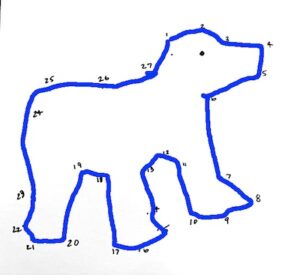
Remember the old connect-the-dots puzzles in kids’ books and the daily newspaper? You find dot number one, then draw a line to dot number 2, then to number 3, and so on. When you were finished, you should have a picture the puzzle maker wanted you to see.
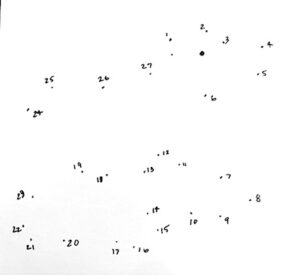
Storytelling and communication are both the act of putting the dots out for the listener. You know all the dots, you know where they are supposed to go, and you know the order in which to connect them.
The difference lies in knowing which dots to put up, in which order, with or without connections.
Storytellers may put up the dots out of order, connect some of them, and leave some for the listener to connect. The art of storytelling is in doing this in such a way that the listener gets a complete picture. It’s up to you whether that picture is the same one you intended, or one that imposes their own interpretation on the constellation of dots you’ve presented.
Communicators should not only put up all the dots in the right order, but they should also connect the dots for the listener. For clear communication, you don’t want to force the listener to interpret the dots into their own picture. They may come out with a very different picture than the one you think you’re presenting.
In any particular presentation or written piece, you may use elements of storytelling and elements of communication. If I had more time, I’d probably throw another story in here to illustrate the importance of the information I’ve communicated. (As I did with the cancer fundraiser above, and as I did in this post about miscommunication back in 2023.)
But emotional connection is not necessary for good communication, and information transfer is not necessary in a good story.
Just use the right techniques for the job at hand.
Connect with me
Schedule a consultation session or sales call now, or drop me a line.
With Take Your Time Before Time Takes You, learn to make the most of every day through thought-provoking exercises and perspective-twisting stories. Get it now in paperback or ebook.
“It changed my life.” – TP, client
“A go-to guide for people who want to improve their lives but don’t know where to start.” – MJ, earlier reviewer

RELIT: How to Rekindle Yourself in the Darkness of Compassion Fatigue gives practical, actionable advice on avoiding and overcoming compassion fatigue and caregiver burnout. My chapter explains how I stay centered and focused so I can give every client my best, every time.
Download my chapter for free: Show up. Try hard. Be nice.
Or just go buy the whole book. It’s worth it.