People will work with you, against you, or around you
If you’re a leader, people will learn to work with you, work against you, or work around you based on their experience of your leadership.
One of my clients (I will call her Mary for this article) recently complained that her new manager is dead weight. The previous leader was active, engaged, reliable, and dedicated. This new manager is at best unreliable, and most of the time entirely absent.
This is more common than you might think, but I dug in to understand why Mary thought her boss was dead weight. After poking and prodding and hearing the evidence, I had to agree.
Mary works with a small but highly effective group of peers and colleagues. They have managed to keep things going relatively well, and even make some innovative changes despite being pretty much leaderless.
But Mary feels uncertainty, and at times like she’s out on a limb. Every request is met with ambiguity. Mary’s only reliable touch point with the boss is a monthly one-on-one meeting, which is mostly a status update. The boss is often out of the office, but no one really knows where or what he’s doing.
Mary wants leadership. Mary wants the boss to take an active role in leading the work.
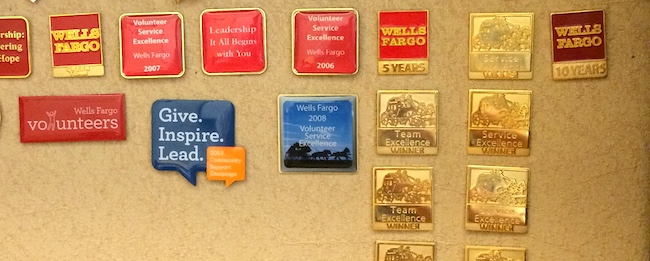
I can relate, in a way. In 2007 I was part of the three-person team running global employee programs at Wells Fargo. My beloved boss, Joan McDade, was diagnosed with lung cancer and passed away in 2008. Much of that year when she was sick, the three of us on the team worked without a manager. Not that I blame her! She was in chemo treatment one week out of every three. Joan actually apologized to me the week before she died because she didn’t feel she could give me a thorough performance review. That was the type of person she was. Fiercely devoted to everyone in her circles, and dedicated to the good of the world. We didn’t get a manager for more than a year after she died. We just continued to work together and lead ourselves.
But back to Mary. Mary is a fundraising manager at a nonprofit, and her boss is the Executive Director. The ED in an organization like this would be expected to be personally involved in a lot of the fundraising activities, particularly major donor and corporate partnerships. The previous boss certainly was. But this new ED simply does not do those things.
I told Mary, “You have three choices. You can work with your boss, you can work against your boss, or you can work around your boss.” (Mary was not interested in the fourth option: leaving the organization.)
Mary had been trying desperately to work with the boss, and she had come to our session wanting to know how she could get him to do the things he should be doing. And Mary is no idiot. She had been trying to “manage up” in all the ways you could reasonably think of. None of them had worked.
So, even though working with the boss was still the ultimate desire, it looked like that would be a long game. In the meantime, Mary needed results and needed to make sure the organization wouldn’t backslide with this absence of leadership.

Next we looked at working against her boss. Unless the boss is actively doing something destructive or unethical, this is usually a bad move. In this case, the organization’s Board thinks the ED is a very good fit. Most boards tend to trust the ED unless things are going desperately sideways or totally falling apart.
So if Mary decided to approach the board, raise the alarm, and put pressure on her boss to work differently, who would likely win? Not Mary. And not the organization. Mary is one of those under-the-radar hard workers who knows all the important detail. A forced conflict would probably end badly for everyone. (This is not an emergency situation; the org is not in immediate crisis, so there are solutions yet to be tried before hitting the alarms.)
The third choice would be to work around the boss. And, in fact, this is what Mary and the team had been doing for some time, though they didn’t realize it. They had even been succeeding in many ways. They had just felt bad about it because that’s not how the organization should work, and they were worried that some donor relationships might suffer if the ED wasn’t personally involved. Often, they also felt they were making decisions above their pay grade. Legitimate concerns, in my opinion.
So I asked Mary what we should really focus on in our session. We could do what she originally wanted, which was to brainstorm how to change the boss’s behaviors. Or we could discuss trying to get the Board to understand how the boss was failing and get more involved.
Or we could plan how Mary and the team could achieve the organization’s goals despite the dead-weight boss. Part of that plan would be to ensure that credit was given where credit was due. Make it clear who was providing the leadership, the work, and the results. That way, if things went well, the team would get the credit. If things went poorly, the team would have the receipts to share with the board so it wouldn’t be a case of the ineffective boss blaming staff for underperformance.
The lesson for leaders
The leadership lesson here is that if you are a leader, your people will learn to work with you, work against you, or work around you.
Leadership is complex. In my opinion, ED of a nonprofit is one of the loneliest roles in business.
In a nonprofit, board members are volunteers inspired by the mission, and often they don’t understand the intricacies and nuances of running the business. Teams are typically understaffed, underpaid, and under-resourced because nonprofits are held to ridiculous standards of austerity. The ED sits in the middle of it all, balancing investment against spend, impact against organizational health, board engagement against board involvement… it’s a constant and complex balancing act. All while managing their own health and wellbeing.
This is why I love coaching nonprofit executives. The challenges are complex and multifaceted, touching every aspect of business. EDs can’t turn to their board members. They can’t vent or complain to their staff. Sometimes they can consult with peers at other nonprofits, but often they see their peers as competitors for limited resources. As an experienced, disinterested third party, I can help them brainstorm, talk through problems, develop skills, and keep on track.
Working with an executive coach who understands the unique constraints, challenges, and culture of nonprofits is a huge multiplier in organizational effectiveness. Most boards think “leadership development” means “attend a workshop,” but no single training event is worth a penny if you don’t have the ongoing support in integrating that learning, along with constant adjustment and growth.
If you’re a nonprofit funder, one of the best things you can do in this economy, with all the unique unpredictability in this market, is invest in an executive coach for the nonprofits you fund. If you’re unsure how to do this, claim some time on my calendar and we’ll talk through it.
Connect with me
Schedule a consultation session now or drop me a line.

With Take Your Time Before Time Takes You, learn to make the most of every day through thought-provoking exercises and perspective-twisting stories. Get it now in paperback or ebook.
“It changed my life.” – TP, client
“A go-to guide for people who want to improve their lives but don’t know where to start.” – MJ, earlier reviewer

RELIT: How to Rekindle Yourself in the Darkness of Compassion Fatigue gives practical, actionable advice on avoiding and overcoming compassion fatigue and caregiver burnout. My chapter explains how I stay centered and focused so I can give every client my best, every time.
Download my chapter for free: Show up. Try hard. Be nice.
Or just go buy the whole book. It’s worth it.